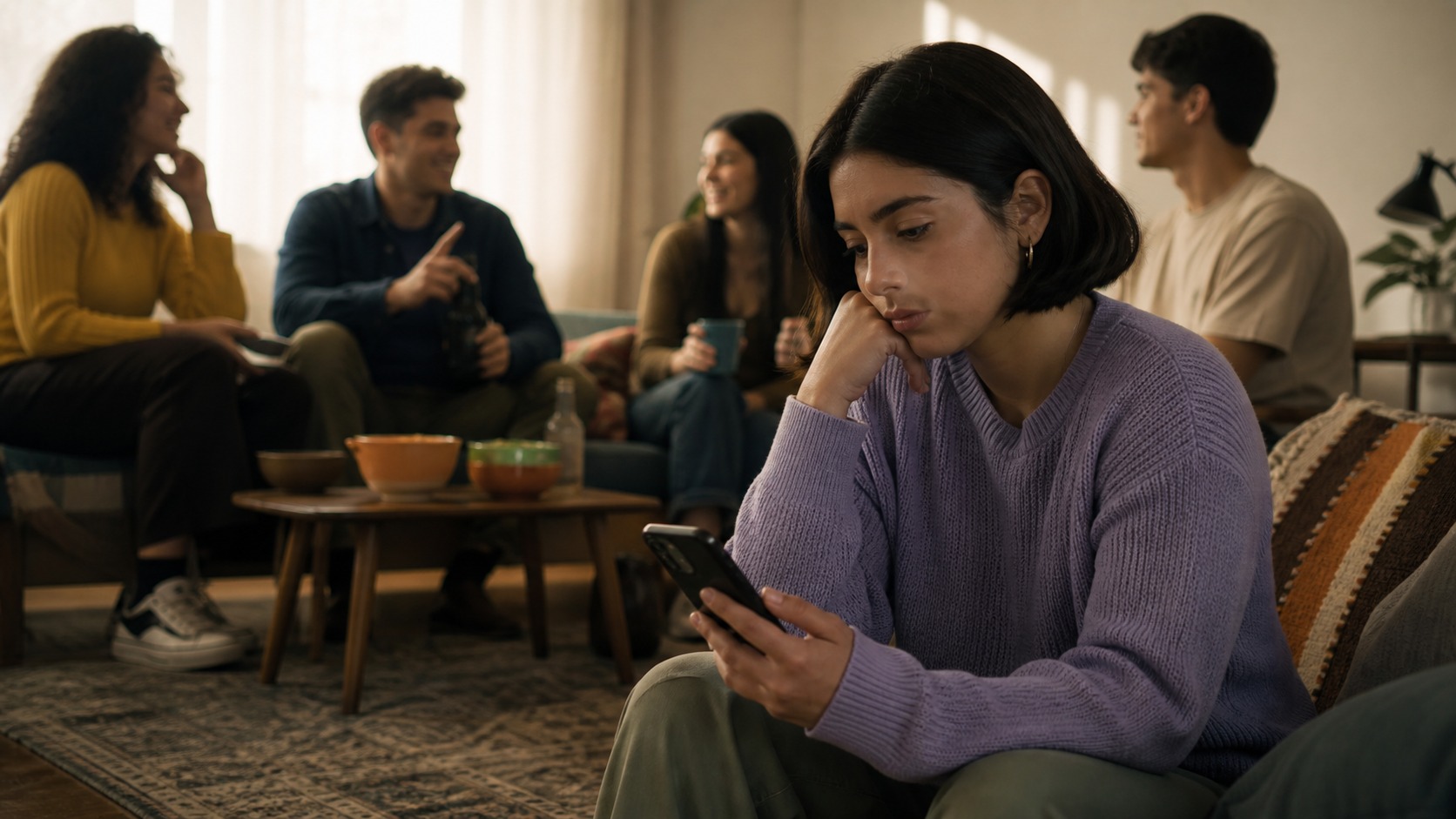
Listening to a teenager who reports bullying requires adults to abandon their usual script: the rapid checklist of questions, the immediate hunt for proof, and the promise that everything can be resolved without conflict. The first responsibility is to create a place where experience is not treated as an examination. Listening does not require accepting every interpretation without judgment, but it does mean recognizing that the speaker holds essential knowledge about the harm, fear, and relationships sustaining it. A protective community neither leaves the injured person alone nor makes testimony the price of receiving help.
Bullying is not a single disagreement between two students with equal power. It involves repetition, imbalance, and difficulty defending oneself, even when each event looks minor in isolation. Power may rest on popularity, age, gender, ethnicity, disability, sexual orientation, economic circumstances, or command of digital spaces. A professional response therefore cannot stop at ordering an apology. It must understand the pattern, halt exposure, protect rights, and rebuild the conditions for safe coexistence.
The first listening encounter shapes everything that follows. If an adult interrupts, voices doubt, or demands a flawless chronology, the teenager may conclude that asking for help increases danger. Calm attention, clear information, and shared decisions can instead restore some of the freedom bullying has taken away. Equity appears when support adjusts to different needs. Participation becomes real when the affected person can influence measures that will alter everyday life.
Listening without turning the account into an interrogation#
A safe conversation begins with genuine availability. The adult should find a private place, state how much time is available, and explain the limits of confidentiality before requesting detail. Open invitations such as “tell me what you need me to understand” allow the young person to organize the account around lived experience. Specific questions come later and seek safety rather than inconsistency: what is happening, for how long, where it occurs, who could offer support, and what the teenager fears an intervention might cause.
A safe conversation begins with genuine availability. The adult should find a private place, state how much time is available, and explain the limits of confidentiality before requesting detail.
Memory under stress does not behave like a recording. Silence, changes in sequence, or details recalled days later do not automatically discredit an account. A professional records facts in descriptive language, separates observation from reported information, and avoids labels that imply blame. The conversation must also check for immediate danger, self-harm, sexual violence, serious threats, or the distribution of images. Those circumstances require specialized safeguarding procedures without delay.
Listening includes providing information. Teenagers need to know what will happen to their words, who will receive information, and when they will hear back. A promise of total secrecy may destroy trust if a serious risk later has to be disclosed. Honest practice explains that privacy will be protected as far as possible and that information will be limited to people able to help. Whenever safety permits, each step is previewed and the teenager's view is requested.
Families deserve guidance, but they should not automatically displace the adolescent's voice. Some families minimize events from fear; others seek immediate confrontation. A school can contain both reactions, present evidence, and establish one communication route. When home is unsafe or contributes to risk, coordination must involve protection services and alternative trusted adults. The priority is not the institution's reputation. It is reducing harm and widening the network of support.
Reading the context rather than one incident#
A rigorous review combines separate interviews, observation of settings, available records, and accounts from witnesses. It does not stage a face-to-face confrontation to see who appears more convincing. Nor should the affected person repeat the story to numerous adults. One safeguarding lead can coordinate information and avoid duplicated questions. Inquiry must be prompt, proportionate, and consistent with fairness to everyone involved, while protective measures remain active as facts are clarified.
A map of locations exposes shared responsibility. Corridors, transport, cafeterias, locker rooms, class chats, and games may connect one pattern. The boundary between school and home does not remove a duty to respond when the impact enters education. In digital settings, speed, audience, and persistence intensify harm. Simply advising someone to switch off a phone may deepen isolation by cutting off valued friendships and essential information.
Witnesses are not one uniform group. Some laugh to avoid becoming a target, some forward material without considering its reach, and others try to help without adequate tools. The response distinguishes responsibility and provides safe ways to report. An anonymous form can reveal signals, but it cannot replace accountable follow-up. The community learns that seeking help is not betrayal; it is a way to interrupt a situation nobody should have to solve alone.
Aggregated data can expose unequal conditions: who is absent, where fear rises, which groups receive insults, and how long help takes. Collection must protect privacy and avoid creating stigmatizing shadow records. A climate survey cannot prove an individual case, but it can identify blind spots. Evaluation should include perceived safety, attendance, participation, and trust in adults, rather than relying only on the number of disciplinary reports.
Case 1: the rumor that empties a cafeteria table#
In an illustrative case, a fourteen-year-old girl begins eating alone after a rumor circulates about her relationships. There is no explicit threat; classmates exchange looks, laugh, and post photographs of the empty table. A teacher notices the change and asks without pressure. The student fears that a public assembly will spread the rumor further. The school accepts that concern and appoints one trusted professional to coordinate protection.
During the first days, supervision in the cafeteria changes discreetly, a peer chosen by the student offers support, and her ordinary activities remain available. The inquiry identifies those who began the distribution and those who amplified it. Content is removed under established procedures, families are contacted separately, and specific boundaries are taught. The student decides which friends may receive a minimal explanation without being required to disclose intimate information.
Repair is not a photographed apology. Those responsible acknowledge concrete acts, stop the conduct, delete copies, and complete verifiable actions to restore safety. The team checks the cafeteria, digital spaces, and the student's wellbeing every week. Two months later, she again chooses where to sit. The decisive outcome is not that the conflict disappears from institutional records; it is that she regains choices without carrying responsibility for monitoring her own case.
Case 2: ableist jokes in a sports team#
A student with a mobility disability reports that teammates hide his equipment and describe repeated comments as jokes. The coach had interpreted group laughter as evidence of trust. In a private conversation, the student explains that he smiled to prevent escalation and is considering leaving the team. The school recognizes the power imbalance and does not require him to display distress in front of the students involved.
Access to equipment is secured immediately, locker-room supervision is assigned, and the student chooses a contact before and after practice. Separate interviews show that several teammates followed two influential students. Consequences reflect different responsibilities, while everyone receives clear teaching about disability, consent, and humor. Participation in training is not withdrawn from the affected student. Harmful conditions, rather than his opportunities, are what must change.
The response includes an accessibility audit and uncovers barriers not directly part of the bullying. The student contributes to improvements without becoming the compulsory representative of every disabled person. After six weeks he reports greater safety but asks to continue regular check-ins. The team does not close the case because of early improvement. Reviews at three and six months recognize that repair requires time and sustained evidence.
Case 3: coordinated exclusion in a class chat#
In another scenario, a group creates a parallel chat to ridicule the pronunciation of a newly arrived student. Partial screenshots reach teaching staff. Instead of convening everyone together, the safeguarding lead checks immediate safety and listens with language support. The student wants to keep using the main class chat because assignments circulate there. Advising him to leave the only informal academic channel would reward the exclusion.
The school retains only necessary evidence, limits its circulation, and requests removal of the content. It then requires assignments to be posted on an accessible school platform so that a private social network cannot control participation. Chat administrators face appropriate consequences and examine the specific harm of turning linguistic difference into hierarchy. Families receive translated information and a written follow-up timetable.
The class undertakes work on coexistence without exposing the case or asking the student to educate peers. Students practice interrupting harmful messages, refusing to forward them, and offering private support. The affected student chooses to join an oral project when he feels ready. Repair is assessed through access to information, absence of renewed mockery, broader interactions, and his reported sense of belonging, not through forced reconciliation.
Protecting, holding accountable, and repairing#
Protective measures should be immediate and reviewable. Moving the affected student may look convenient, but it often penalizes that person and breaks supportive relationships. Increased supervision, schedule adjustments, accompaniment, separation of those causing harm, and quick reporting channels should be considered first. If the teenager requests a move, it can be evaluated without presenting it as the only exit. Every measure needs an owner, a date, and evidence showing whether it works.
Accountability does not mean humiliation. Sanctions may be necessary, especially for severe or repeated behavior, but they should sit alongside boundaries, learning, and monitoring. The person who caused harm needs to understand the act, its effects, and how repetition will be prevented. That student's educational or family needs also deserve attention without becoming excuses. Caring for everybody is not the same as distributing blame equally.
Restorative practices are appropriate only when there is safety, sufficient acknowledgment, and freely given consent. Ordinary mediation assumes symmetry and may be unsuitable for bullying. The injured person must not be required to hear explanations, accept an apology, or join a meeting to help the institution reach closure. Repair may be indirect, written, or without contact. Refusal to participate must never reduce protection.
Repair means restoring possibilities: entering a space without fear, preserving friendships, learning, resting, and being recognized without permanent definition by the event. It also requires changing the environment that enabled the pattern. The community reviews rules, supervision, training, and participation routes. If the process ends with one student's disciplinary file, the same conditions may produce new harm involving different people.
A durable system for coexistence and follow-up#
A useful policy states how to report, who receives information, what timelines apply, how records are protected, and when external services intervene. Students and families need an understandable version in accessible formats and relevant languages before a crisis occurs. Staff require practical training, consultation, and authority to act. Improvisation thrives when duties are scattered or depend entirely on one unusually committed professional.
Follow-up continues after visible conduct stops. Short meetings with the affected student address safety, sleep, attendance, concentration, and relationships. The lead also checks for subtle retaliation. Frequency can decrease gradually in agreement with the teenager. When psychological support would help, it is offered as a resource, never as evidence that the problem lies in the young person's inability to tolerate what happened.
Youth participation improves policy when it is more than decoration. Student councils can examine help routes, language, unsafe places, and campaigns. They do not access personal case data or replace trained adults. Their proposals receive reasoned responses and resources where appropriate. Freedom is practiced through speaking without retaliation; equity through removing barriers to diverse voices; participation through converting those voices into decisions.
A community that refuses to abandon an injured person avoids both silence and spectacle. It listens patiently, acts proportionately, communicates honestly, and asks again later. Abandoning the script means accepting that each teenager understands risks no protocol can fully anticipate. Professionalism lies in combining rights, evidence, and care until safety no longer depends on individual endurance.
Institutional sources#
- UNESCO, resources on school violence and bullying: https://www.unesco.org/en/health-education/safe-learning-environments
- UNICEF, guidance on preventing and responding to bullying: https://www.unicef.org/end-violence/how-to-stop-bullying
- US Department of Health and Human Services, StopBullying.gov: https://www.stopbullying.gov/
- Council of Europe, Digital Citizenship Education: https://www.coe.int/en/web/digital-citizenship-education
- UK Department for Education, preventing and tackling bullying: https://www.gov.uk/government/publications/preventing-and-tackling-bullying