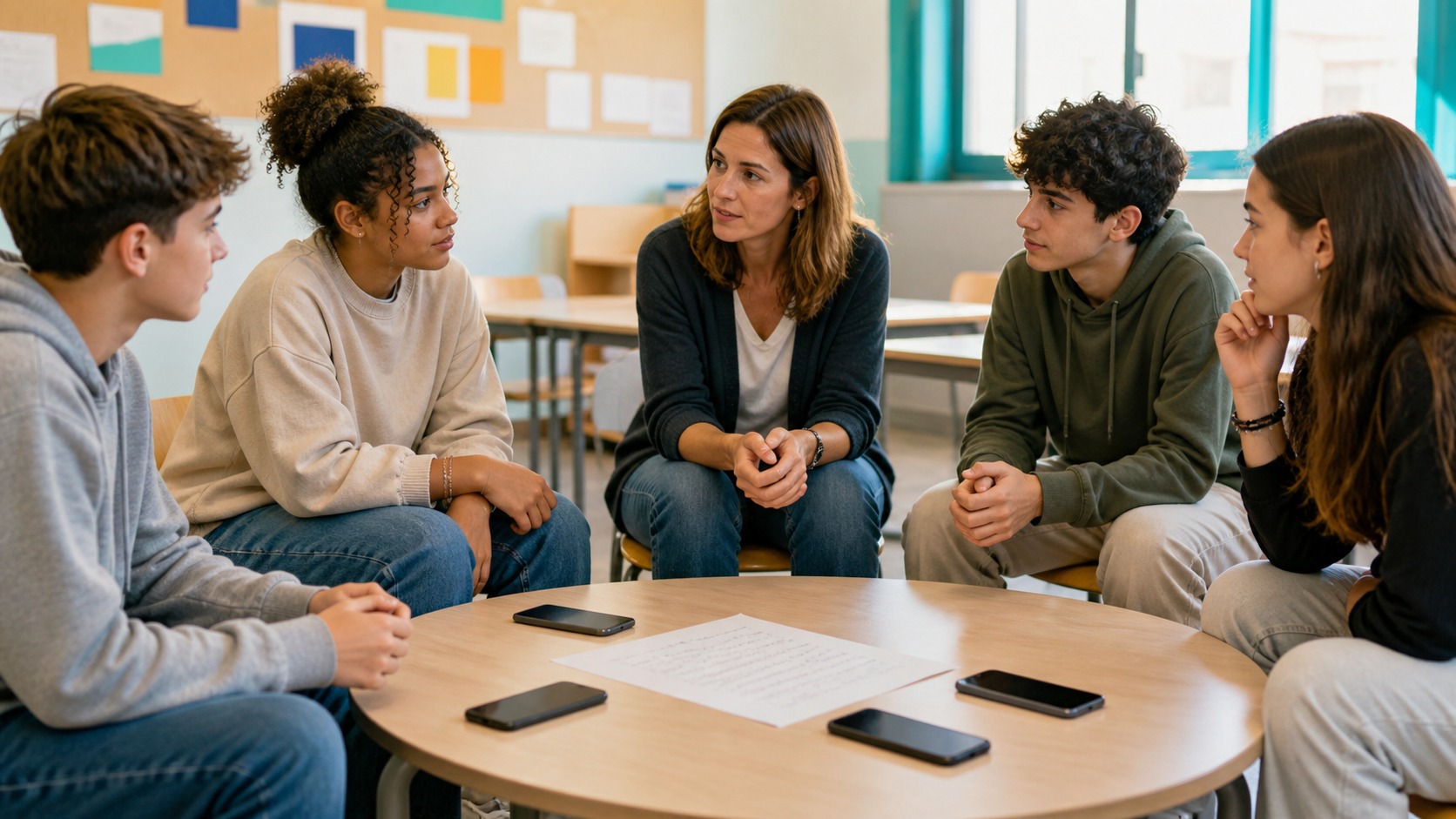
A carefully handled conflict can strengthen a community when the response protects the person who experienced harm, clarifies responsibility and refuses to turn repair into a spectacle. Bullying is not simply a disagreement between equals or a collection of unrelated incidents. It emerges when conduct is repeated or capable of being repeated, power is uneven and self-protection is genuinely difficult. A responsible community does not require the injured person to solve that imbalance alone. It provides listening, safety, proportionate investigation and follow-up until participation becomes possible again.
Speed matters, but speed is not haste. A rushed intervention may seek silence, protect an institution's reputation or close a file before anyone understands what happened. Caring for conflict means stopping immediate harm while reserving space to verify facts, identify support and recognise different needs. The affected person needs safety and some control over the account; the person who caused harm needs clear limits and genuine opportunities to change; the wider group needs dependable standards and an explanation that does not disclose private information.
This approach does not weaken accountability. It makes accountability specific by distinguishing intention, conduct, impact and the duty to repair. It also recognises that bullying can move through a classroom, changing room, workplace, neighbourhood and digital platform without respecting time boundaries. A message sent at night can shape arrival at school the next morning. The response therefore cannot be fragmented across departments or depend on one individual happening to see the entire sequence.
Recognising bullying without labelling every disagreement#
Ordinary disagreements belong to communal life. Two people can defend incompatible interests, become angry and need mediation without bullying being present. The picture changes when one party holds greater influence, group support, strength, popularity, intimate information or technological control. Repetition does not require identical acts: rumours, exclusion, mockery, threats and image sharing can form one pattern. Looking at the whole sequence prevents each incident from appearing too minor to justify action.
Ordinary disagreements belong to communal life. Two people can defend incompatible interests, become angry and need mediation without bullying being present.
Observation should include indirect changes. Sudden absence, reduced participation, avoided routes, missing possessions, disrupted sleep or withdrawal from activities can indicate insecurity, although none is proof by itself. Responsible staff should ask calm questions, document without hostile interrogation and compare sources. Premature labels can obstruct cooperation, yet caution must never become an excuse to delay protective measures when a plausible risk exists.
In digital settings, the audience changes the scale. A post can be copied, resurfaced or remain available after removal from the original channel. The number of actions does not determine seriousness: one act of sharing may create continuing exposure. An institution should retain only necessary evidence, restrict access and explain how it will be used. Requiring the affected person to display humiliating content repeatedly can add avoidable harm.
The first obligation is to restore safety#
Protection begins with a simple, non-blaming question about what the person needs to get through the next hours and days. Support may include a trusted adult, discreet route changes, accompaniment, content removal, health or psychological care, and a safe method for reporting continuation. Measures should not punish the reporter indirectly. If the only solution requires leaving the group, abandoning an activity or losing digital access, the burden has been placed on the wrong person.
A useful safety plan assigns names, times and channels. It states who receives an alert, who coordinates the response, when information will be updated and what happens outside regular hours. It anticipates retaliation, group silence and new forms of contact. The affected person participates in decisions appropriate to age and circumstances but does not carry responsibility for designing the entire procedure. Respecting a preference does not mean promising an outcome the organisation cannot guarantee.
Families or other support networks need understandable information within applicable privacy limits. Purely defensive communication deepens mistrust. It is more useful to explain what is known, what remains under investigation, which protection is active and when the next review will occur. Where immediate danger, credible threats, sexual violence or self-harm risk exists, the response must escalate to competent services without waiting for an ordinary process to finish.
Investigating rigorously without staging a public trial#
An investigation should gather accounts separately, preserve open questions and record dates, places, channels, witnesses and effects. Group interviews can reinforce the dominant version or expose the person who spoke. Absolute anonymity should not be promised where safeguarding duties require action. The interviewer explains confidentiality limits before collecting detail, reduces repetition and separates observed facts from interpretation. That discipline protects every party and improves decision quality.
Proportionality requires attention to severity, persistence, power imbalance, age, vulnerability, reach and subsequent response. An immediate apology may provide information but does not erase impact or replace follow-up. An early denial does not by itself prove greater culpability. The institution should rely on available evidence, allow each party to respond and justify measures against published criteria rather than popularity, external pressure or fear for reputation.
Information is shared only with people who need it to intervene. The wider group may require a renewed statement of standards and support without receiving personal details. Institutional gossip causes harm too. Responsible communication confirms that a situation is being addressed, repeats routes to help and avoids identifying participants. Transparency means explaining the process and accounting for its performance, not opening private case files.
Case 1: sustained exclusion at a secondary school#
In an illustrative case, a student stops participating in laboratory work and begins missing school on Thursdays. Each absence appears minor until a tutor connects several events: remarks about her accent, missing materials, repeated removal from a messaging group and laughter when she asks to join a team. The tutor does not arrange an immediate confrontation. The school activates its procedure, agrees on a trusted contact and ensures that the student can continue the activity without isolation.
Staff conduct separate interviews, inspect only communications supplied voluntarily and identify a pattern coordinated by two students with passive group support. The school applies proportionate educational limits, informs families, works with witnesses who did not intervene and changes a group allocation that had reinforced power. The affected student declines a restorative meeting at that stage. Her refusal is respected and does not diminish her right to protection.
Attendance, participation, indirect contact and felt safety are reviewed for twelve weeks. Later, the student accepts a written act of repair and a verifiable commitment concerning materials and digital channels, without being expected to forgive or receive a public apology. The case shows that strengthening community does not mean bringing parties together quickly. It means maintaining protection, changing group conditions and allowing the harmed person to retain meaningful choice.
Case 2: digital harassment in a sports club#
In a second case, a young player becomes the subject of manipulated images and humiliating polls after making a mistake in a match. The content circulates through unofficial accounts, but team members participate and the impact reaches training. Club leaders do not declare the issue outside their remit. They appoint a coordinator, retain essential links without redistributing images, assist with removal requests and offer the player an accompanied arrival.
The investigation identifies who created, amplified and celebrated the material, distinguishing levels of responsibility. The coach temporarily suspends selected activities, defines conditions for return and receives training in recognising jokes that consolidate hierarchy. Families review communication channels and conduct expectations connected to club membership. The group is not shown the material during educational sessions because understanding harm does not require reproducing it.
Repair combines active deletion, private acknowledgement, restoration of a lost sporting role and continued review. The player chooses which general message the club may communicate and which details remain confidential. Three months later, the team evaluates belonging, bystander action and confidence in the reporting channel. The central lesson is that digital citizenship does not end when a platform closes: organisations remain responsible for the relationships members carry between settings.
Case 3: intimidation and isolation at work#
A third case develops in a small company. A worker receives impossible tasks with shifting deadlines, is excluded from meetings required for delivery and hears insinuations about her competence. Each choice might appear to be poor coordination, but the timeline demonstrates persistence and hierarchical dependence. Human resources separates performance assessment from the conduct investigation, protects pay and essential duties, and provides an alternative reporting line that bypasses the person named in the complaint.
The company reviews emails, assignments and testimony under restricted access. It confirms a pattern of isolation and retaliation following a professional disagreement. It applies disciplinary measures under its policy, repairs distorted performance objectives and restores training opportunities. It also audits team workload because the abuse had prospered in a culture that confused pressure with excellence. Mediation is not used while the power imbalance remains active.
Six months of monitoring checks for subtle retaliation, lost projects and ignored health deterioration. An external specialist reviews the process and recommends an independent channel. The workplace improves not by declaring harmony but by turning conflict into evidence for redistributing authority, protecting rights and correcting incentives. Individual repair is supported by structural prevention.
Repair does not mean forced reconciliation#
A restorative practice is appropriate only when harm has stopped, sufficient acknowledgement exists, participation is voluntary and skilled facilitation can balance the conversation. It must not be offered to avoid consequences or produce an emotional scene. The affected person may prefer a written statement, material restitution, group changes or no contact. That person may also withdraw. Safety takes priority over the institution's wish to conclude the story with visible reconciliation.
The person who caused harm needs to understand impact, accept specific obligations and demonstrate change over time. An effective apology names conduct without excuses, recognises consequences, describes repair and accepts that forgiveness is not guaranteed. Educational and disciplinary measures can coexist. The purpose is not to impose a permanent identity but to prevent renewed conduct and rebuild trust through verifiable action.
Bystanders hold a decisive position. Some supported the behaviour, while others laughed, remained silent through fear or failed to understand its seriousness. Working with them can transform the social norm that sustained bullying. Education should offer safe actions: accompany, distract, document without distributing, report and find assistance. Not everyone can confront directly. A mature community expands the available ways to intervene and protects the person who raises an alert.
Prevention, evaluation and shared responsibility#
Effective prevention combines simple standards, stable relationships and accessible channels. Procedures should be rehearsed before a crisis, offered in understandable formats and tied to deadlines. Staff need training, time and supervision; a document without operational capacity creates a false promise. One-off awareness events contribute little if degrading jokes, discrimination and retaliation continue to earn social rewards.
Evaluation cannot be limited to complaint numbers. An initial increase may indicate greater trust. Useful measures include response times, recurrence, absence, perceived safety, follow-up quality and differences between groups. Aggregated data needs careful handling and identity protection. The voices of people who used the system reveal barriers that statistics miss, including fear of disbelief and difficulty locating an available adult.
A learning community reviews each case without turning it into public material. It asks which signals were missed, which barriers delayed support, which decisions protected and what needs to change. It assigns owners and dates, communicates general improvements and preserves resources to sustain them. Carefully handled conflict strengthens the community because it proves that dignity does not depend on popularity, safety is a shared obligation and repair requires time, limits and presence. Nobody should be left alone to prove that a system works.
Institutional sources#
- UNESCO, school violence and bullying: https://www.unesco.org/en/health-education/safe-learning-environments
- UNICEF, guidance on cyberbullying: https://www.unicef.org/end-violence/how-to-stop-cyberbullying
- World Health Organization, youth violence prevention: https://www.who.int/news-room/fact-sheets/detail/youth-violence
- Council of Europe, No Hate Speech campaign and educational resources: https://www.coe.int/en/web/no-hate-campaign