A close look turns a vague request into real work#
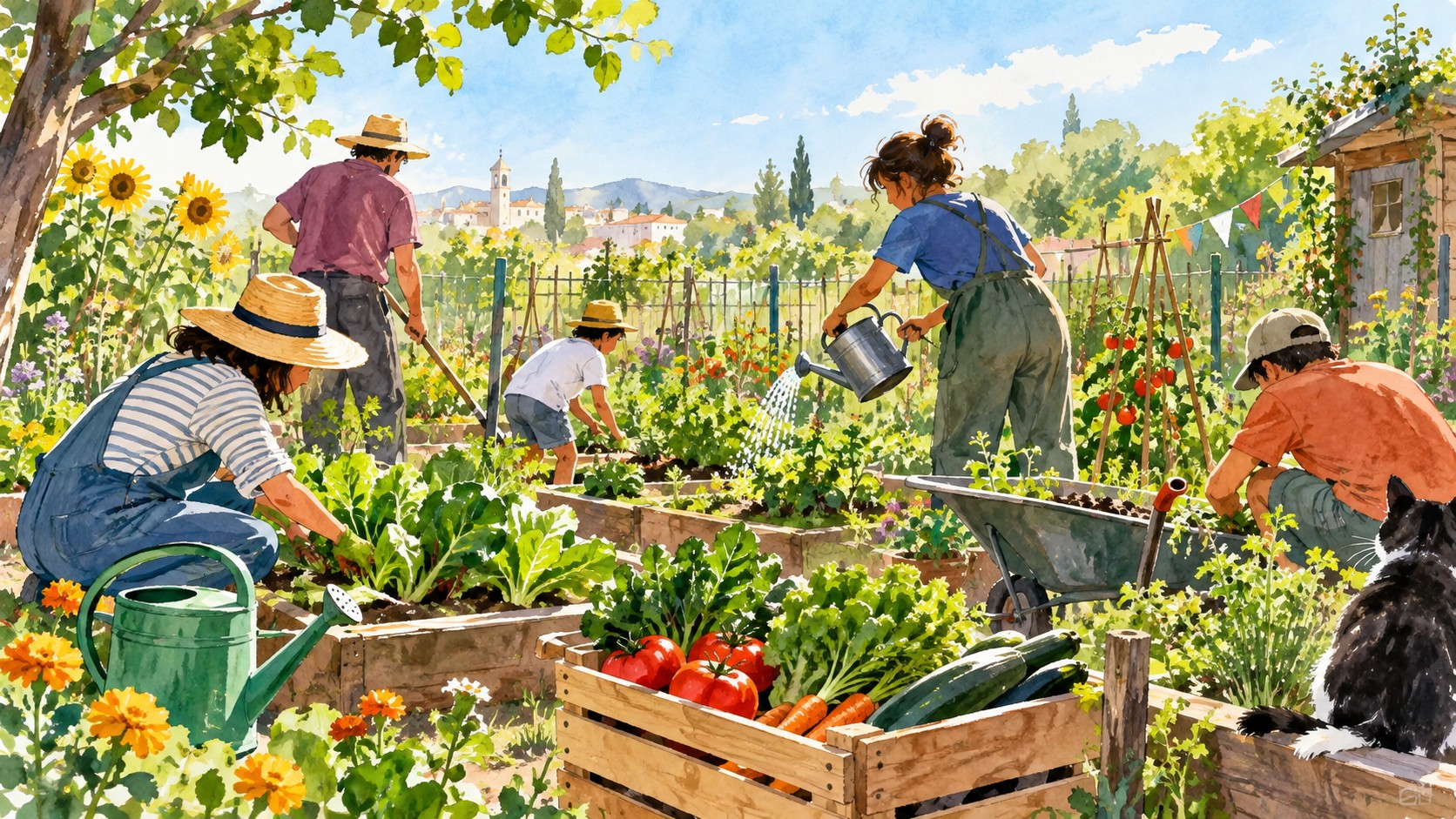
From a distance, a school garden looks like a pleasant shared idea. Up close, it involves hoses, storage keys, tools, schedules, messages to families, and an explanation for children when a crop fails. The teacher did not need one permanent garden hero. She needed several manageable pieces to find a place in different lives. One person might bring gloves. Someone else could ask a local shop about compost. A former pupil might make a small sign. Breaking the work down does not make it less meaningful. It makes it visible enough for people to decide whether one part fits their week, rather than asking them to promise a level of availability that nobody has described.
From a distance, a school garden looks like a pleasant shared idea. Up close, it involves hoses, storage keys, tools, schedules, messages to families, and an explanation for children when a crop fails.
Encouragement matters, but it does not distribute labour#
Kind reactions have value. They tell a person who starts something that the idea has been noticed. Yet a heart icon does not unlock a shed, move a box, or give relief to the person who has been keeping a list of tasks alone. Naming that gap is not a complaint about people who react warmly. Some do not know what would help; some fear agreeing to more than they can sustain; others are already carrying responsibilities they should not have to explain. A useful invitation makes room for all of that. It describes the task, the time it takes, and who to contact, while making clear that declining will not damage the relationship.
A limited contribution can still change the day#
For the next meeting, the supporting association replaced its broad appeal with four options: sort seeds for forty minutes, carry two boxes to storage, photograph the beds, or write a short note for families. Each option named a day and a contact person. It also included a line that mattered: “If this does not work for you, we will keep looking.” The yard did not suddenly fill with volunteers. It did receive more usable answers. One person chose the photographs; two siblings carried the boxes; another neighbour drafted the note from home. Specificity allowed people to contribute without performing a permanent identity as the reliable, endlessly available person.
Knowing someone nearby is not permission to assign them a role#
Neighbourhoods often contain bits of knowledge about one another: who works from home, who has organised events before, who is usually seen at the school gate. Familiarity can be comforting, but it becomes unfair when it is turned into an invisible list of people who are expected to say yes. Previous experience does not create a standing obligation. A family that joined an activity last year may have no space this month. A person who appears calm may be carrying more than anyone sees. A respectful community shares information widely, then asks with care and accepts no as a complete answer. It does not require private explanations in exchange for freedom from a task.
Partial answers can reveal an access problem#
The Saturday session overlapped with work, care responsibilities, and travel. One parent could help for twenty minutes after school on a weekday but had no key to the storage area. A neighbour knew a great deal about planting but found the group messages difficult to follow. These were not excuses to argue against. They were information about how the project had been designed. Perhaps there could be a shorter time slot, a named keyholder, or a clearer message without assumed knowledge. Not every barrier can be solved immediately. Listening to it still matters, because it stops a difficulty of access from being misread as a lack of concern.
Small agreements protect the people who always notice first#
When work is not clearly shared, it often falls to the person who spots the problem early or cannot bear to leave it unsolved. Over time that person may step back, not because the project has stopped mattering, but because goodwill has quietly become a burden. The garden did not require a large committee to avoid this pattern. A shared sheet listing what was done, what was pending, and when it would be reviewed could already help. The group could also agree that nobody takes on a new role without knowing how much time it needs and who might relieve them. Such agreements do not create unlimited capacity. They make the load discussable before it becomes invisible exhaustion.
Scaling down can be a way of protecting continuity#
It may have been unrealistic to maintain all three beds through winter. That did not mean the garden had failed. The group could keep one bed active, cover the other two, and explain that care sometimes means matching an idea to the resources that are actually present. A neighbourhood association can run fewer activities for a while or postpone a plan until enough support exists. This kind of honesty is not pessimism. It prevents a promise from becoming a private strain on two or three people. Shared work is not measured by how much it claims to cover, but by how responsibly it sustains what it has chosen to take on.
Recognising when a concern needs specialist support#
Local networks can listen, connect people, and offer practical companionship. They should not pretend to replace specialist services. If a school conversation brings up a serious health concern, a risk situation, or distress that needs more than neighbourly support, it is better not to diagnose or hand out improvised advice. Someone might help find reliable information, accompany a person to look for the appropriate service if they want that, or respectfully encourage them to speak with a health professional when guidance is needed. This boundary does not weaken community care. It clarifies what a local group can safely offer and where other forms of support are necessary.
A possible action for one ordinary week#
The person reading the notice does not need to rescue the whole garden. They might choose one short task, suggest another time, or point out a barrier the group has missed. “I can check the photos on Thursday,” “I cannot make Saturday, but I can bring seeds,” and “How long would this take?” are all useful replies. They do not promise more than a real week can hold, and they give the group information it can act on. Nearby community is often built this way: through named, bounded pieces of work that can be handed over. When participation stops depending on diffuse enthusiasm, it has a better chance of becoming fair, repeatable, and genuinely shared.