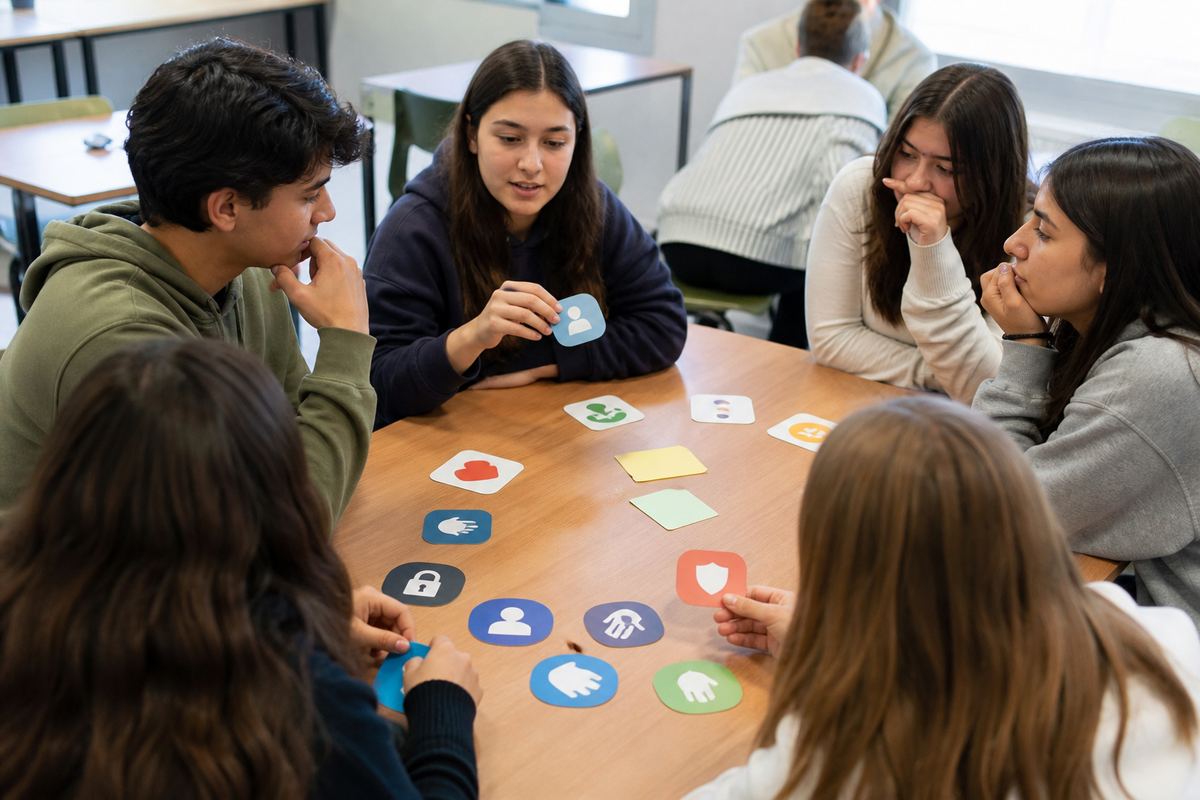
A solution can look simple because it serves many people and still close the door on someone else. A digital-only form, a meeting at one fixed time, a group that communicates only through images, or a rule written in difficult language can have that effect without an intention to exclude. Inclusion begins by looking at the whole journey: who receives the notice, understands the proposal, can reply, and is left out before the group even knows they are absent.
A majority is not a sufficient measure of justice. A community may celebrate that almost everyone used an app, attended an assembly, or accepted a rule; that result does not explain what happened to someone sharing a phone, needing more time to read, not knowing the message language, or unable to leave home. Aggregate data can help improvement, but it must not turn absent people into a footnote.
Digital networks increase the capacity to inform and organise. They can also speed up a habit: when the expected reply arrives quickly, a person who needs to ask differently may be described as slow or uncooperative. That label confuses an environmental barrier with a personal quality. Participation needs channels that do not punish a person for requiring another route.
No one should have to disclose a difficulty in order to deserve an alternative. Accessibility and privacy reinforce each other when a service offers clear choices from the start: understandable text, human contact, accessible formats, reasonable deadlines, and a way to correct data. An option available to everyone reduces the need to explain intimate circumstances to the whole group.
Sharing an initiative with the whole community requires more than posting a link. It requires checking whether the link works with assistive technology, whether content is understandable without prior context, whether a contact replies, and whether a decision can be reviewed. Participation stops being decorative when an observation about a barrier actually changes the process.
Normality is designed too#
A rule is often presented as neutral because it is applied equally. Yet making everyone follow the same route does not create equal access. Twenty-four hours' notice weighs differently on someone working shifts, caring for another person, or relying on an unstable connection. A video call without captions weighs differently on someone with a hearing impairment or who communicates better in writing. Formal neutrality does not replace review of effects.
A rule is often presented as neutral because it is applied equally. Yet making everyone follow the same route does not create equal access.
The United Nations Convention on the Rights of Persons with Disabilities places accessibility and participation among conditions for exercising rights equally. In a neighbourhood, school, or public network, this principle calls for anticipation. It is not enough to improvise an adjustment after someone complains. Formats, deadlines, a way to request support without exposing data, and responsibility for answering should be defined.
Anticipation does not require guessing every need. It requires keeping reasonable routes open. A call can include a physical place, remote connection, telephone, and a later summary; a form can be saved and continued; a consultation can accept spoken or written replies. Every option must actually work. An email nobody answers merely moves exclusion elsewhere.
Language matters as well. Words such as normal, easy, or for everyone can hide decisions requiring knowledge, devices, and time. Public information becomes more accurate when it says what is needed, what happens without it, and where help is available. That clarity enables informed decisions and reduces dependence.
Case one: the messaging group that stopped notifying people#
A neighbourhood association concentrated notices in one messaging group. The change reduced calls and shared posters quickly. Within weeks, older residents and a neighbour using a screen reader stopped attending activities. They were not indifferent: some lacked a compatible phone, others received dozens of unstructured messages, and the posters had neither alternative text nor contact details.
The association reviewed the issue without testing absent people. It kept the group, but established a weekly plain-text calendar, voluntary telephone reminders, and an updated noticeboard at the civic centre. Each relevant image carried a description; important decisions were recorded in a short minute. A response rota meant that a question did not depend on the goodwill of the chat administrator.
The improvement was not abandoning the tool but preventing it from becoming the sole threshold. The number of messages was no longer the principal indicator. Unanswered questions, new participants, material accessibility, and anonymously reported reasons for leaving were reviewed. Sending a lot of information is not the same as informing well.
Case two: help that required proving too much#
A community platform for exchanging support required an account, photograph, exact location, and detailed explanation before a need could be posted. Its design aimed to prevent fraud. In practice it pushed away people afraid to share data, those unable to verify a digital identity, and those needing occasional help without narrating a personal situation to strangers.
The team separated safety from exposure. A general request needed only an alias and broad area; contact details were shared only when both sides accepted. The platform explained its rules with examples, enabled mediation, and offered a municipal telephone number for people unable to create an account. Reports were reviewed under published criteria, and no one lost access because of an automatic decision without a chance to clarify.
Trust increased because the limits were understandable. Prevention did not collect everything possible; it reduced harm through minimum permissions, deletion periods, responsible moderation, and exit options. The Spanish Data Protection Agency recalls that data must be adequate, relevant, and limited to what is necessary. That rule especially protects people with less room to absorb an error or public exposure.
Case three: the assembly that counted only raised hands#
A council consulted residents about a square and celebrated that most replies arrived at an evening in-person session. The report described consensus. Yet the time clashed with care, limited transport, and work for part of the neighbourhood; the projected plan was not readable from the back, and the later form required electronic identification many people did not use.
The next phase included afternoon workshops, an accessible table, plain-language materials, interpretation when requested, and paper forms in public facilities. Contributions were organised by issue, not by status or speed of intervention. The final report said which proposals were accepted, which were not, and why. People could identify errors before the file closed.
Participation became more legitimate by recognising that a voice is not worth less because it comes through paper, telephone, or mediation. The OECD recommends informed, inclusive, accountable participation. Counting replies without considering entry conditions can yield a statistical majority and a socially incomplete decision.
An inclusive network shares work and power#
Inclusion is not the responsibility of one person solving exceptions. It needs budget, time, training, and known rules. A moderator must be able to stop discriminatory treatment; a web designer must understand accessibility; a convener must reserve room for changes. When these tasks rest on invisible volunteering, the network becomes fragile and care falls on those already encountering more barriers.
A periodic review can begin with simple questions: which channel is essential for participation, what data are requested and why, what happens when a person cannot answer immediately, and who can correct information? Answers should become verifiable changes rather than general promises. Publishing a review date, responsible contact, and incident summary builds a more honest relationship with the community.
UNESCO notes that digital inclusion needs skills, connectivity, relevant content, and safeguards, not devices alone. Lending a tablet therefore does not solve a confusing platform or a decision with no appeal. The divide may involve language, trust, time, or safety. A good assessment hears those differences without requiring people to justify them repeatedly.
Technology can strengthen community when it reduces paperwork, connects resources, and keeps people informed. It should stop where it turns the speed of some people into a requirement for all. Designing for wider margins prevents majority efficiency from depending on anyone's invisibility. This is concrete citizenship: participating, caring for participation conditions, and correcting the system when it leaves someone out.
Making an alternative visible does not divide a community; it allows more people to contribute experience, knowledge, and judgement. When a barrier is noticed early, correcting it also benefits people who have not yet encountered it. Reliable networks do not reward silence. They make it possible to report obstacles, review them respectfully, and leave a public response that informs the next decision.
It is also important to publish what was learned after a change. A short, accessible account of the barrier, the measure adopted, its limits, and the next review date lets residents see that participation has consequences. It prevents the same problem from being rediscovered privately and gives future organisers a practical starting point rather than an empty commitment.
Institutional sources: United Nations, Convention; Spanish Data Protection Agency, aepd.es; OECD, citizen participation; UNESCO, digital inclusion.