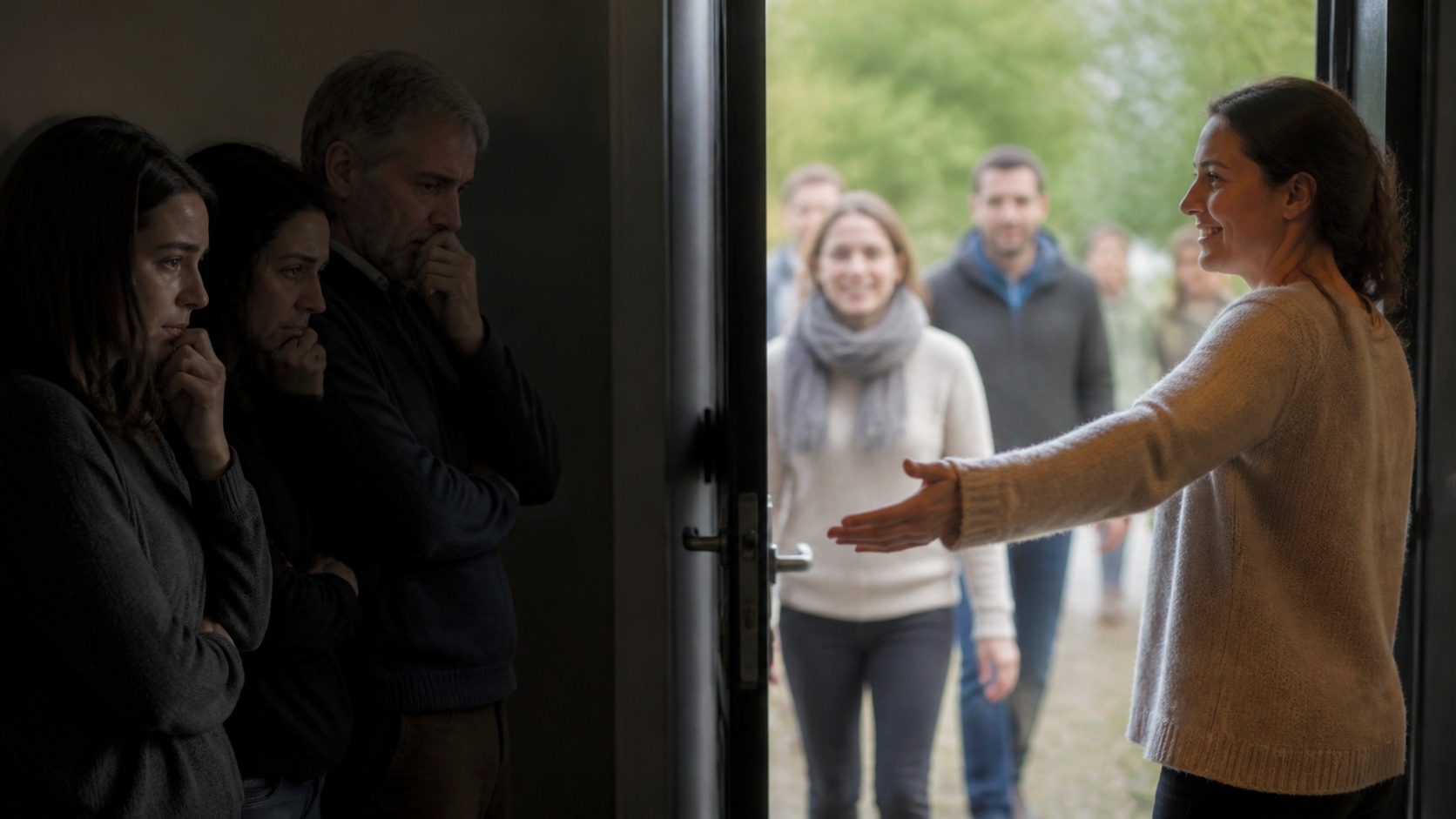
Nuria's home has three digital speeds. Her father answers calls because he thinks it is rude to let them ring. Her teenage daughter sends voice notes for everything and barely opens email. Nuria moves between meetings, the family group, and her banking app. One afternoon they receive different messages telling the same story: someone needs help without delay. Not all such messages are false, and that is exactly the difficulty. If the family reacts with fear to every alert, they will end up ignoring one another. If they react without a pattern, anyone who knows their habits can use affection as a shortcut.
A family protocol is not a secret password or a promise that deception will never happen. It is an agreement for recovering thinking time when a request tries to take it away. Its value lies less in being clever than in being workable for people with different ages, abilities, and schedules. It should allow someone to ask for real help without feeling interrogated. It must also accept that a person may be tired, worried, or ashamed. The goal is not to find culprits inside the family; it is to stop an invented emergency from deciding for the family.
Begin with scenes, not panic#
Many security conversations begin with a list of dangers. That is understandable, but it rarely stays in memory when an unsettling message arrives. It is more useful to discuss recognizable scenes. What would we do if someone wrote from a cousin's phone saying they had changed their number? How would we check a request for money from a child who is travelling? What happens if an older person receives a call that mentions real family details? The answers expose specific gaps: numbers that are not saved, decisions that rely on one person, or shared accounts without rules.
Many security conversations begin with a list of dangers. That is understandable, but it rarely stays in memory when an unsettling message arrives.
Nuria can raise these questions over a calm meal, not just after forwarding an alarming news story. Each person explains which channel they actually use and which one they check less often. Her father may prefer a call; her daughter may answer a voice note sooner; an aunt living abroad may need an agreed time window. This information is not a technology exam. It is the map that makes a second route possible when the first one is compromised. A protocol works if it respects existing habits and adds an independent alternative, not if it forces everyone to live differently.
It helps to name one simple rule: an unexpected request for money is never confirmed only through the channel where it arrived. The recipient starts another communication using a previously saved contact or an agreed route. The rule avoids arguments about whether a text “sounds” genuine. An attacker may copy expressions, know about a trip, or exploit a hijacked account. Changing channels does not show distrust of a relative; it shows that the family has decided to protect its relationship from outside manipulation.
Share roles without creating watchers#
Some households rely on one person to handle forms, remember passwords, or call the bank. That concentration can feel practical until that person is at work, unwell, or is the one receiving the deceptive request. A family agreement can share functions without turning anyone into a police officer for the others. One person might be a check-in contact for unusual payments; another might keep an updated list of important numbers; another might accompany someone making a report. Roles are reviewed and can be declined.
Consent is crucial. Receiving a security alert does not authorize someone to inspect bank movements, private conversations, or another person's location. The protocol should say precisely what is shared and for what purpose. A daughter might agree that her mother can call to confirm an emergency, but not that the family can demand her daily location. Security that destroys privacy eventually loses cooperation. When rules have clear limits, asking for a check stops looking like control and becomes recognizable as a specific kind of help.
The plan should also anticipate that the person supposedly in trouble may not reply immediately. Silence is neither evidence of fraud nor a reason to transfer without checking. It may mean they are in class, driving, or out of coverage. Rather than multiplying desperate messages, the family can agree on a ladder: try a second channel, contact someone nearby, and, if there are real signs of physical danger, use the appropriate services. That sequence separates legitimate concern from pressure someone is trying to manufacture.
An agreed phrase is not a master key#
Some families use an agreed word or question to verify a request. It can be useful as an extra layer, especially in an unusual call. But a shared phrase should not become the only defense. It may appear in written conversation, be overheard by someone nearby, or be recovered from a compromised account. Presenting it as an infallible key creates a sense of safety that encourages people to answer too quickly.
It is better used inside a broader procedure. First, call back on a known number; then ask a question whose answer has not been exposed; and, if money is involved, calmly confirm the recipient and the reason. Questions can change with the situation. There is no need to invent riddles: it is enough to recall a recent detail that only the people involved can place. If the caller becomes angry because someone verifies, that response is information, not an obligation to comply.
Language matters greatly. Instead of saying, “prove that you are you,” someone can say, “I will call your saved number to make sure the help reaches you.” That wording protects the dignity of someone who genuinely needs something and reduces the embarrassment of the person asking. Emotional scams thrive when verification seems like a lack of love. Making it a kind habit changes the expectation: helping also includes checking.
Talk about money before it is needed#
One reason a fraudulent request works is that it exposes conversations a family has delayed. Perhaps nobody knows how much another person can send without risking rent, or who should be told if an account seems compromised. There is no need to publish every income figure or turn the table into an audit. It can be healthy, however, to agree on practical limits: which payments require a second opinion, which savings are never touched because of a message, and how urgent help can be offered without sending money to the first details received.
There are alternatives that preserve the ability to help. If a relative has really lost a wallet, perhaps a ticket can be bought from one's own account, a reservation can be paid directly, or a trusted person nearby can be contacted. If a financial need is confirmed, the payment can go to the usual recipient rather than a newly supplied account. Thinking through these options beforehand means the protocol does not sound like “we do not help.” It means “we help in a way that does not leave anyone else exposed.”
This point matters especially where there is an unequal power relationship. A young person may feel unable to admit losing money; an older person may fear losing independence if they disclose an error. The agreement must promise support before blame. If someone has fallen for a scam, the first steps are to stop further contact, gather useful information, and seek help, not demand explanations in front of the whole family. Shame is an ally of fraud because it turns a repairable incident into silence.
Rehearse a short response#
A protocol that exists only in a long document disappears when it is needed. It is better to rehearse a thirty-second response once or twice a year. One person can play an urgent caller; another can say that they will check through a second route; the group can see whether agreed numbers and steps are easy to find. The rehearsal is not meant to make anyone anxious or prove who knows more. It is meant to discover a household difficulty before someone exploits it: an old contact, an app nobody knows how to use, or a relative who has not heard the plan.
After the rehearsal, simplify. Three steps in an accessible place may be enough: stop, call using a saved contact, and ask for support before sending. Instructions must be readable for someone who needs glasses, who is not comfortable with a phone, or who joins a message group late. A photo in a hard-to-find folder is not a protocol. A protocol is a practice that anyone can remember without being made to feel childish.
The rehearsal also makes space to discuss boundaries. Nobody is required to answer at night unless they have expressly chosen to do so. Nobody should give banking codes to demonstrate love. Nobody needs to solve alone a request that frightens them. These statements authorize a pause when pressure rises. Often the most realistic defense is not a new tool but the certainty that there is another person to call before clicking or transferring.
When deception has already happened#
Even a prepared family can make a mistake. Manipulation changes, difficult days exist, and stolen information can make a story highly convincing. The protocol needs a second part for that moment: stop replying, call the provider's official channel from a known number, save relevant details without spreading them, and ask for company. Someone affected may be confused and need another person to take notes or listen to the call. Accompanying them does not mean taking ownership of the problem; it means reducing the burden while decisions are made.
Then it is worth reviewing the scene without making it a trial. What detail made the message believable? Was the verification route hard to see? Was there fear of bothering someone? What small change would make the next response easier? The review can end with one concrete action: update a number, change a payment limit, or explain the agreement to a new family member. Learning in this way avoids both false certainty and the belief that nobody can be trusted anymore.
The family protocol worth keeping does not promise armor. It offers a way to preserve care when someone tries to turn it into haste. This week, gather two or three people close to you and decide what your second route will be for confirming an unexpected request for money. It is a short conversation, but it can make the next urgent call meet a family ready to help without handing its decision over to fear.