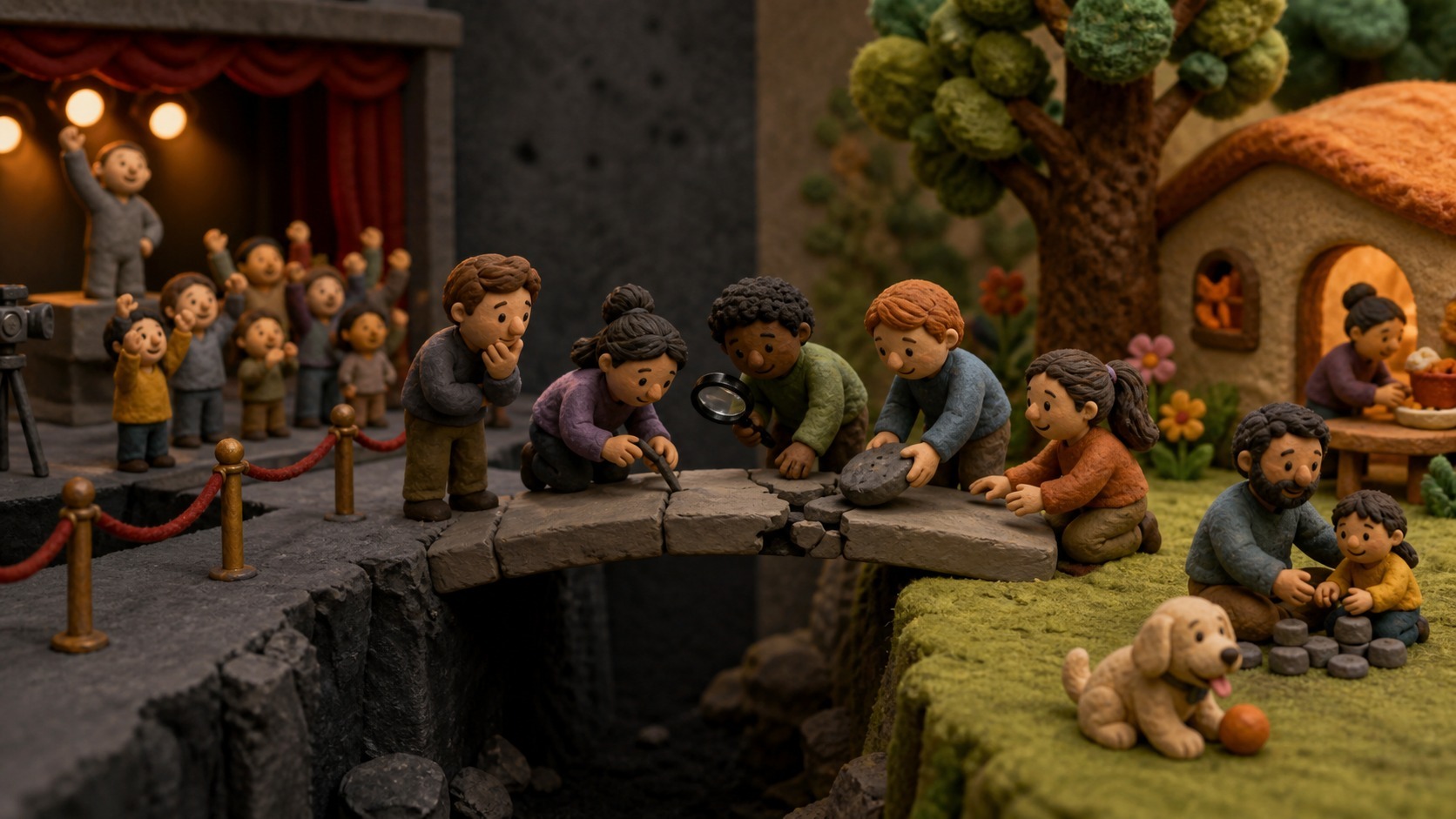
The neighbourhood radio station launches a search tool that transcribes interviews and proposes clips for its archive. During the presentation everything seems simple: a volunteer asks about the old market and voices, dates, and photographs appear. People applaud the time that will be saved. Three months later, a presenter searches for a conversation with a resident who reported housing problems. The search returns other interviews but not that one. The recording is still on the server; what is missing is a label that stopped being generated when audio quality changed. Nobody knows because nobody has an hour set aside to check what deteriorates after novelty stops making headlines.
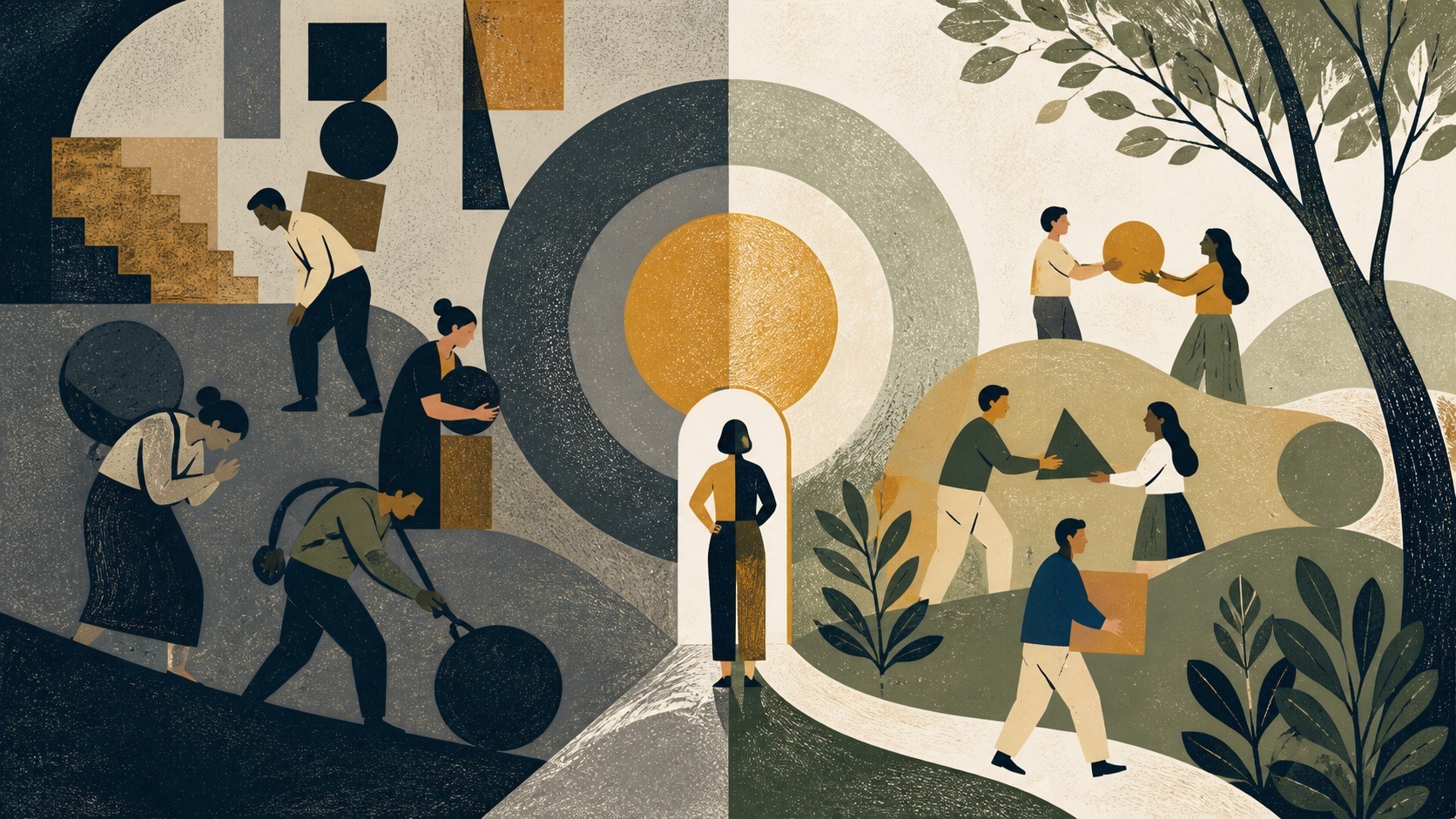
Tools do not remain the same merely because they stay switched on. Microphones, file names, uploaders, supplier terms, and the words through which a community describes itself all change. A system that worked in a demonstration can lose connections without raising an alarm. The question is not whether a small radio station should become a technical department. It is whether promising automation without assigning later care turns maintenance into hidden debt for the person with the most patience or the least ability to refuse.
Maintenance is editorial and social work#
At the station, review is not merely restarting a program. It is checking whether the archive still represents the voices it claims to preserve. If interviews in Catalan are transcribed less well than those in Spanish, if women’s names are confused with place names, or if street recordings vanish from searches, the problem is not an interface irritation. It decides who can be found when somebody rebuilds a local history. Technical omission becomes cultural omission.
At the station, review is not merely restarting a program. It is checking whether the archive still represents the voices it claims to preserve.
A useful routine begins with concrete questions. Each week, one person can review a small sample of recently uploaded material: a studio interview, a call, noisy audio, another language, a sensitive topic. They need not certify that everything is perfect. They need to note what does not appear, which summary distorts a sentence, and which case needs human correction. This sample creates an early signal before the archive collects months of silent errors. It also gives people shared language for discussing the issue without reducing it to “the AI failed.”
Time for this work belongs in the calendar, not in goodwill. One assigned hour, cover when the reviewer is absent, and a simple place to record findings are worth more than an elaborate policy nobody can enact. If the shift happens only after a volunteer’s paid work ends, the radio station has moved the cost of innovation into invisible labour. Caring for community infrastructure is work; acknowledging it prevents technology from reproducing the inequality it promised to reduce.
Repair requires knowing what changed and for whom#
When the presenter discovers the missing interview, the station should avoid a rushed fix that repairs only that file. It can compare several similar recordings, inspect when certain labels stopped appearing, and ask the supplier or the person configuring the tool whether an update occurred. A proportionate record matters: date, type of incident, consequence, measure taken, and outcome. There is no need to retain every search made by every listener. There is a need to explain why part of the archive became unavailable and how the repair was checked.
This traceability protects people who contributed their voices. An interviewee may ask for an offensive transcript to be corrected, an inaccurate association removed, or a fragment not to be recommended out of context. If nobody knows who can alter the result, the station offers listening without responsibility. A clear contact and a response deadline restore agency to someone made into data. This is not absolute control over collective memory. It is recognition that a public archive has duties when it rearranges the words of living people.
Correction also needs a priority rule. A punctuation error does not carry the same weight as a transcript assigning somebody words they never said or hiding a report of harm. The station can define cases that should stop automatic publication, cases needing review before recommendation, and cases that can be corrected in the next round. This proportion avoids two extremes: freezing everything over every flaw or normalizing serious harm because the system works most of the time.
There is no sustainment without authority and budget#
Initial enthusiasm often assigns someone to install a tool but not to suspend it. Real maintenance requires knowing who can switch off a function, request an explanation from a supplier, and decide that a flow must temporarily return to manual review. Giving that authority does not create an opaque hierarchy. It allows the community to know whom to approach when a problem does not fit a form. Diffuse responsibility protects an organization, not people affected by its processes.
It also needs modest but visible resources: storage for originals, training to distinguish a suggestion from a source, a small accessibility budget, and meeting time to examine incidents. These items compete with other needs, which is why they should be named rather than treated as included in a licence. A radio station may decide it cannot sustain one function. That is not technological failure; it is an honest choice not to deploy more than it can care for.
The supplier relationship improves when the station arrives with documented examples. Rather than saying “search is bad,” it can show what kind of audio was not indexed, since when, what impact it had, and what response it expects. At the same time, it should avoid giving away more voices than necessary for support. A responsible contract includes incident channels, timeframes, information about changes, and a real way to export the archive. External service does not replace local judgment about what deserves preservation.
A mature tool makes room for its own review#
At intervals, the team can take a deliberate pause: test how it would work for a week without recommended clips, check that originals remain accessible, and listen to a selection of corrected cases. The test is not an attempt to return to the past. It asks whether convenience is hiding dependence or deterioration. If the archive can only be understood through a supplier’s screen, the station has not gained memory; it has rented a door into it.
Evaluation should include listeners and interviewees. An open meeting may reveal that results favour already familiar voices, that labels harm a group, or that no route exists for requesting correction. Listening does not require accepting every request without judgment. It requires explaining what will happen, what cannot happen, and why. That conversation makes maintenance a relational practice rather than a bundle of tasks hidden behind a dashboard.
The routine should have a way of measuring its own usefulness. The station can ask whether reported issues receive an answer, whether corrections reach the search results, and whether the same failure returns after a supplier change. These are not productivity targets for volunteers. They are checks that the promised safeguard has material effect. If the record of incidents grows but no one has authority or time to act, the maintenance shift has become another decorative register. Naming that failure early is better than pretending that an archive is safe merely because it contains many files.
The radio station may keep using the search tool because it helps find and share stories. Its value will not lie in looking automatic, but in retaining the ability to review, correct, and stop. The maintenance shift is the moment when a community decides speed cannot write its archive alone. Reserving it makes visible work that protects the memory, dignity, and autonomy of people who speak and people who listen.