The meeting was nearly over when the most consequential question was raised. A city committee had spent an hour discussing whether to change the route of a night bus. The proposal rested on a survey said to show broad support. Its headline figure had appeared in the staff report, on a slide, and in remarks from several elected members. Yet when a driver asked where the original questionnaire could be read, the chair could offer only a summary prepared by the contractor. The figure looked settled because it had travelled so far. Its path, however, had not been open for inspection.
That distinction matters. Evidence is not simply information that favors a position. It is information whose origin, handling, and limits can be examined closely enough for other people to judge what it supports. A survey may be a useful contribution to a decision about a bus route. It can reveal a pattern that public meetings miss or show that an assumption held by officials is wrong. But a useful contribution is not a self-executing mandate. If the original evidence cannot be reached, a percentage can become a substitute for the reasoning that should accompany a public choice.
Making the context clear#
The committee should start by asking what claim the survey actually makes. Did respondents say they wanted a later bus? Did they choose between two mapped routes? Were they asked about cost, walking distance, safety, transfers, or only a general idea of improvement? How many eligible riders heard about the survey, and who had the time, language access, device, or confidence to complete it? These questions do not presume fraud. They identify the boundary of the result. A response from frequent riders may be highly relevant while still failing to describe people who stopped using the service because the current timetable already excludes them.
The committee should start by asking what claim the survey actually makes. Did respondents say they wanted a later bus?
Clear public reasoning keeps three things apart. First comes the record: a questionnaire was issued, a defined number of people answered, and particular responses were counted. Second comes interpretation: the researchers infer that a preference is widespread or that one option is stronger than another. Third comes action: the committee chooses a route, commits funds, or schedules a trial. When those layers merge, an interpretation borrows the force of a fact and a decision pretends to have made itself. Separating them gives residents several ways to participate: they can question the data collection without rejecting transit improvements, or support a trial while disputing the claim that it already has a settled majority.
What changes in practice#
The right to examine evidence does not require publishing private responses. It requires publishing the conditions under which the conclusion was made. A practical evidence file could include the commissioning body, the contractor, cost, field dates, full wording, recruitment method, response count, exclusions, weighting decisions, aggregated tables, and a plain-language account of uncertainty. If a legitimate confidentiality restriction applies, the file should say exactly what cannot be released, why, for how long, and whether an independent reviewer can inspect it under safeguards. A blanket statement that material is proprietary is not an explanation of how a public authority used it.
The format of disclosure can determine whether disclosure is real. A sixty-page technical appendix posted the night before a vote is available in the narrowest sense, but it is not readily examinable by someone with a job, care responsibilities, a screen reader, or limited data access. The city can pair the full record with a short guide that answers: What was asked? Who was reached? What remains unknown? What decision is this evidence being used to inform? It can provide a contact who is responsible for answering questions and publish those questions with replies. This does not lower the standard of rigor. It makes rigor usable outside the circle that already knows how to read a methodology note.
Deciding with information#
An especially important line in the file should be titled “What this survey cannot tell us.” The result might show that respondents dislike long waits, without proving that the proposed route change is the best solution. It might reveal enthusiasm for later service, without measuring the effect on shift workers who would lose a direct connection. Naming these limits is not a ritual of caution. It prevents a favorable statistic from doing work that belongs to policy judgment, budget analysis, and conversation with people whose experience was not captured. A decision can still be made; it simply has to state the additional reasons on which it rests.
Evidence becomes more trustworthy when contrary material has a visible place. Suppose the survey’s overall result supports the change, but the open answers repeatedly raise concern about a poorly lit transfer point. The committee should not hide those answers because they are inconvenient, nor should it elevate each comment into a veto. It should record the concern, explain whether it was considered, and say what will happen next. Perhaps the route will include lighting improvements; perhaps an alternative stop will be tested; perhaps the concern shows that the proposal needs revision. The point is that disagreement remains part of the record rather than becoming an interruption after the result has been declared.
Reviewing and adjusting#
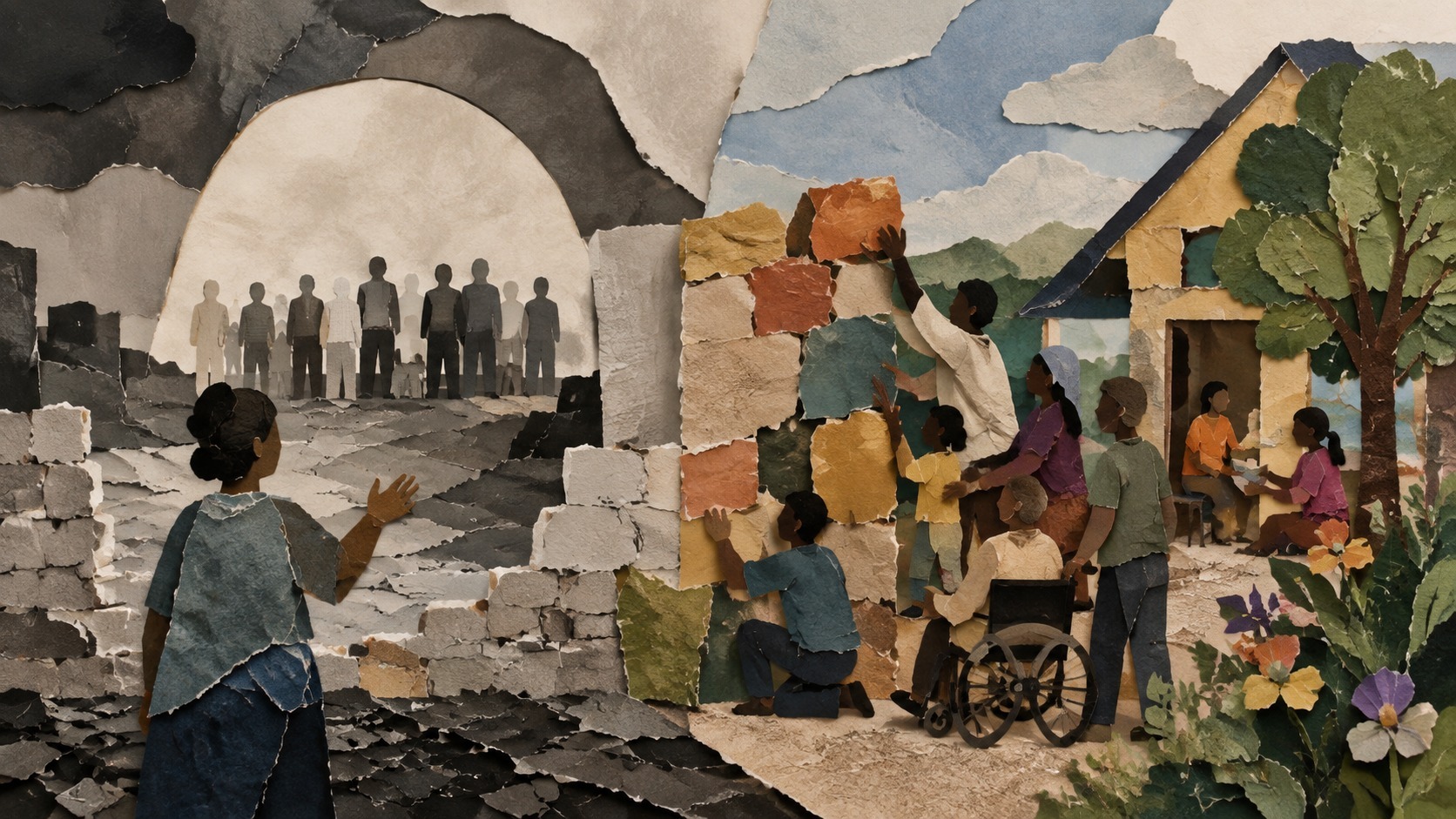
The same principle applies to lived evidence. A wheelchair user describing an inaccessible interchange is not offering an anecdote that sits below the graph. They are identifying a condition under which the policy will operate. Their account needs to be checked, compared, and placed alongside other evidence, but it should not be dismissed because it cannot be reduced to the original percentage. Public decisions are made in streets, schedules, homes, and workplaces. A sound evidence chain joins quantitative patterns to those settings instead of treating them as competing worlds.
Where the consequences are uncertain, a reversible pilot may be more honest than a permanent decision defended by an inaccessible survey. The committee could adopt a temporary route with a published start date, a clear review date, funded accessibility adjustments, and criteria for changing or stopping it. Before the pilot begins, the original survey is released. During it, the city collects operational data and structured accounts from riders, drivers, and nearby businesses. At the review, it compares the initial premise with what happened. This is not delay for its own sake. It is a way to act while retaining the ability to learn.
Responsibility must remain visible throughout that process. The research firm is accountable for describing its method accurately. Staff are accountable for presenting the evidence without inflating it. Elected members are accountable for the value judgment that turns evidence into a choice. The chair is accountable for allowing enough time and a fair route to challenge the record. None of those duties can be delegated to a dashboard. If members decide to proceed despite thin evidence, they should say so plainly, explain the urgency, and commit to a specific review rather than invoking the authority of a number they will not disclose.
The next debate can begin differently. Before discussing whether the headline percentage is persuasive, ask to see the original chain: the question, the sample, the missing voices, the calculations, the limits, and the named person responsible for its use. Then ask what decision the evidence can reasonably inform and what it cannot decide. That order will not make disagreement vanish, and it should not. It will make the disagreement more truthful. A democratic institution earns confidence not by displaying a chart that ends discussion, but by making it possible for people to follow the evidence far enough to challenge, refine, or accept the decision in their own names.