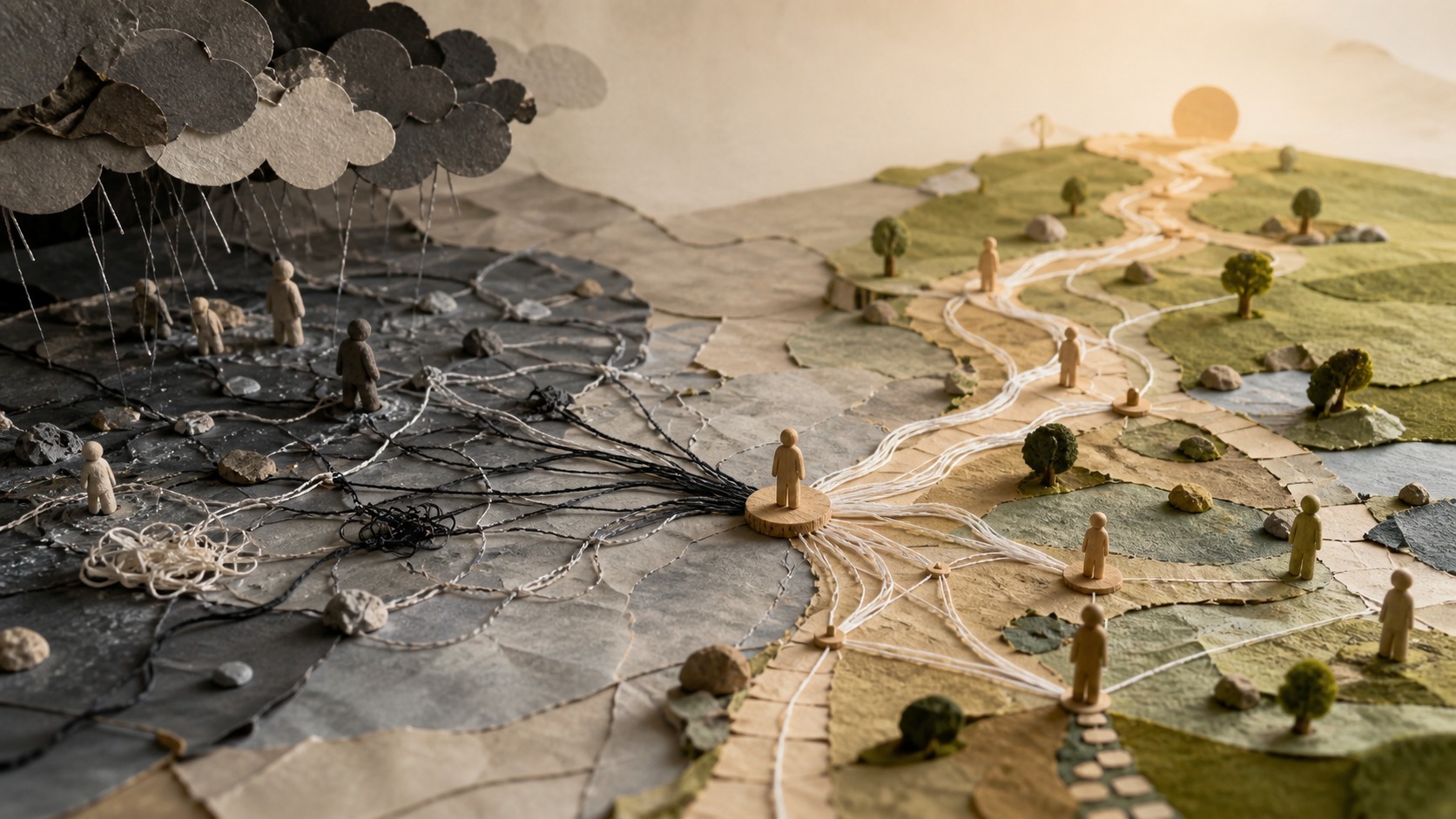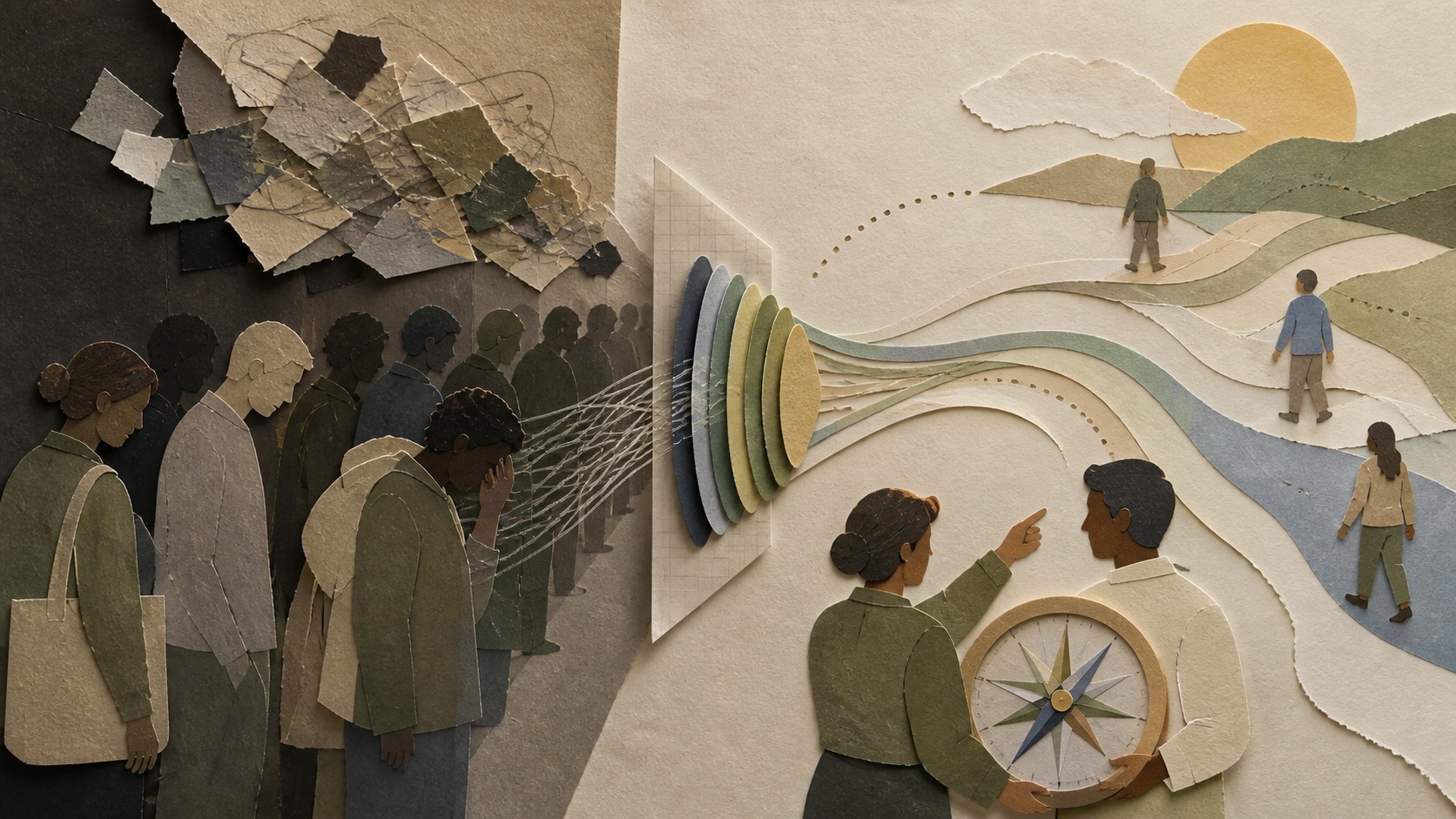
On Friday afternoon everything fitted. The prototype wrote clear summaries, its screen was tidy, and people at the demonstration imagined saving an hour on Monday. Monday arrived with incomplete messages, an unexpected absence, and a mother needing an answer before collecting her daughter. In that context, the question was not whether AI made elegant sentences, but whether it helped a team carry an ordinary week.
From surprise to routine#
Novelty can be valuable because it opens possibilities. It becomes innocent only when we mistake it for evidence. A responsible trial asks future users to place the tool in a routine task and note where they stop, what they verify, and what they do when the result fails. This is not a trick set for a product. It discovers the conditions, knowledge, and time required so that innovation does not become a disguised burden.
Novelty can be valuable because it opens possibilities. It becomes innocent only when we mistake it for evidence.
A cultural centre tested a newsletter generator for four Mondays. On the first it corrected proper names; on the second it noticed accessible events were placed last; on the third someone proposed an approved source list; on the fourth the team chose to retain a final human reading. The useful outcome was not a dramatic number. It was a working method that distributed attention, responsibility, and the right to correct.
Choose a condition for continuing#
Before extending a pilot, state three conditions. First, an observable benefit that must remain, such as less drafting time without more clarification questions. Second, a harm that requires pausing, such as repeatedly omitting a relevant service. Third, who hears incidents and decides using what evidence. These conditions make adoption reversible rather than a shameful retreat when a tool misses its original promise.
The Monday test also lets a team admit that some uses are not timely. If a task contains intimate information, urgency, or a decision defining a right, the pilot may need to stay with internal material preparation. Saying “not yet” can be a competent way to protect quality, not a rejection of learning.
Choose one small ordinary task this week, not a perfect demonstration scene. Ask the person doing it to keep two columns: “it helped” and “it made me repair.” After four days, read those notes before celebrating novelty. A tool deserves to continue when it improves somebody's Monday, not merely Friday applause.
Monday has conditions too#
A useful trial records the setting that makes a good result possible. A demonstration may have been prepared with clean information, a person available to correct it, and time to compare versions. The real Monday can bring an absence, a programme change, and a question hurriedly typed on a phone. Recording those differences shows whether a tool saves work or merely concentrates it on whoever knows how to anticipate its failures. Asking whether the output is persuasive is not enough. Ask what material had to be ready, which knowledge was assumed, and which manual step remained essential. The answers show whether those conditions are sustainable and for whom.
In a cultural service, for example, a newsletter generator may produce an acceptable first version. Yet if it always omits accessibility information, the person who knows the audience must add it under pressure every week. This is not a comma or a style preference. The organisation has placed important information in one worker’s memory instead of making it a visible requirement. During the pilot, keep an incident list with date, task, correction, and consequence. After four weeks it will reveal whether errors shrink, change shape, or keep requiring one person to supply a repair the budget never acknowledged.
Test the next tool on a deliberately imperfect Monday. Ask someone absent from the demonstration to complete a routine task using available instructions, let incomplete data appear, and reserve time to explain what failed. Then choose among three concrete options: adjust the use, retain a human alternative, or stop. Declining a promise that cannot survive an ordinary week is not resistance to innovation. It protects the time and attention an organisation already owes to real people.
Learn from the week that did not go to plan#
A Monday trial gains value when a team can say without embarrassment that part of it failed. If the only information collected is success, people end up repairing outside the report what it cannot admit. A weekly close can instead separate three things: a tool error, a missing condition, and a human decision that remains necessary. This distinction prevents blaming software for everything and also prevents using its name to hide organisational problems that existed before. Sometimes the right result is improving a source; sometimes it is narrowing use to one task; sometimes it is keeping the current process because it responds better to a changing situation.
Comparison must include work that disappears from view when the screen changes. Time the correction, but also note interruptions, consulting a colleague, and the emotional weight of communicating an unconvincing answer. In an ordinary week, those minutes decide whether a promise fits inside the working day or becomes unnamed overtime distributed across people. Share the list with those who will do the work and ask them to define what improvement would be enough to continue. That conversation turns a pilot into a shared decision, rather than a demonstration that others must carry after applause has ended.
A pilot can end well by stopping#
A trial should not have adoption as its only exit. When setting its start, agree what you will observe to decide that the tool does not fit: corrections that do not decline, important information that disappears, or excessive dependence on one person. Writing those criteria at the beginning makes stopping possible without treating the decision as personal failure. It also protects the person who spots a limitation: they need not argue against the excitement of a demonstration, but can point to conditions the group already accepted.
At the close, gather concrete examples rather than general opinions. Compare one task completed with the tool, one completed through the earlier route, and one that needed repair. Ask which version made the next step clearest for the person receiving it. This reveals a value average timings miss: whether the team retains attention to listen, check, and answer when a situation leaves the script. Innovation that frees that space is worth continuing; innovation that consumes it needs another design or an honest pause.
One final question prevents activity from being confused with improvement: which human task became easier and which became harder? Answer it with examples from the week, rather than an expectation from a presentation. If the answer changes by person, the trial must examine that difference before generalising. A tool may have a useful limited place, but only if the team knows its edges, can ask for support, and does not lose the capacity to handle what still cannot fit inside an instruction.
The Monday record should include work that did not happen because the tool was set aside. A postponed reply, a manual check, or a decision to wait can reveal sound judgement. Counting only automated output mistakes restraint for failure and hides the care needed to make ordinary work dependable.