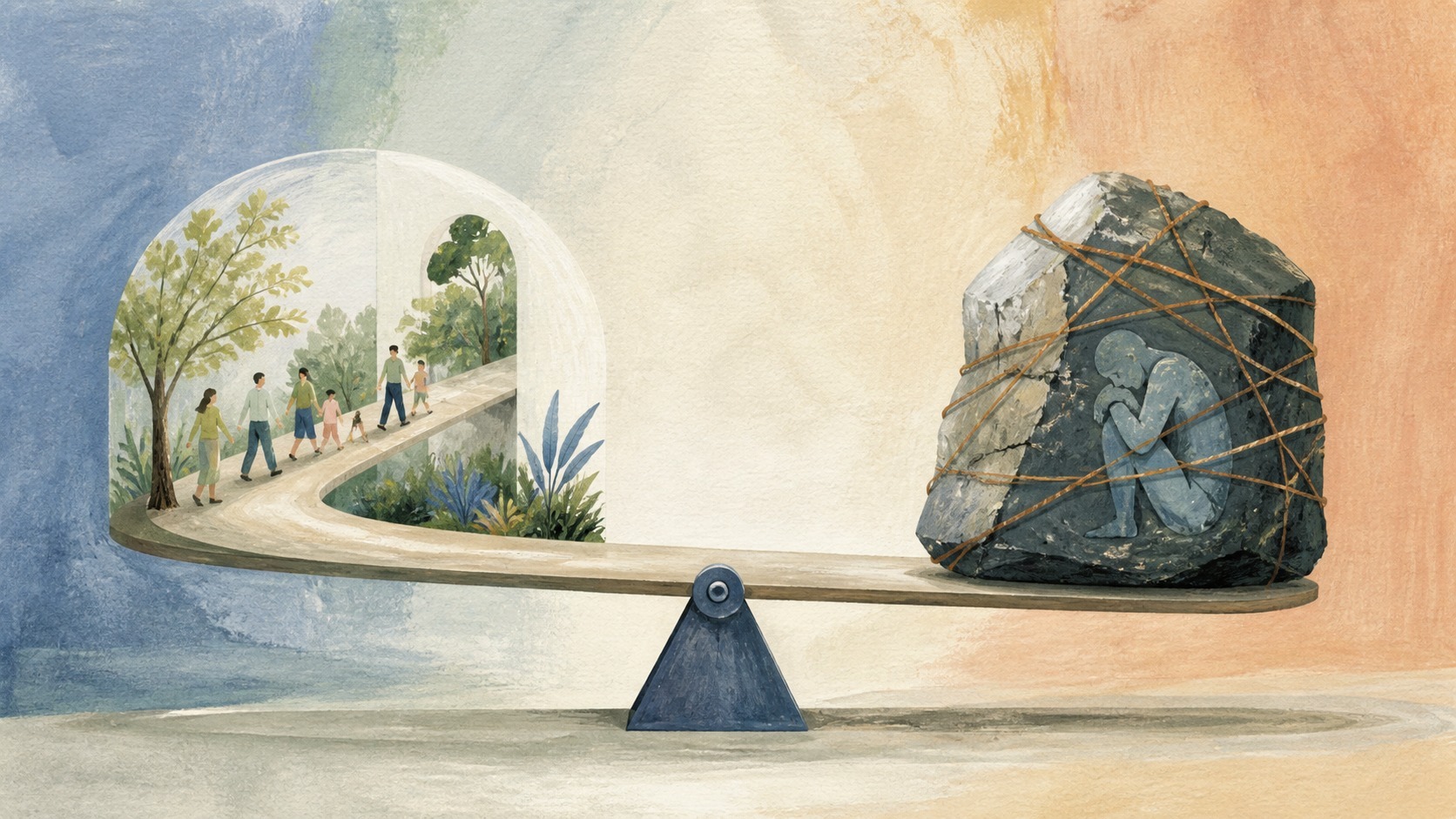
Reviewing progress in health, education, or support services is not about finding someone to blame. It is about calmly looking at what was attempted, which obstacle appeared, and what next step best protects the person. A short, respectful, fact-based review can turn a frustrating process into a more useful agreement.
Why review without blame#
A useful review starts with a simple timeline: which need was identified, which request was made, who responded, and which date remained pending. There is no need to rebuild the entire story. Documents, messages, or notes are enough to distinguish an administrative delay from a decision that still has to be made. This preparation reduces arguments and stops an impression from becoming a fact.
A useful review starts with a simple timeline: which need was identified, which request was made, who responded, and which date remained pending.
Questions change the tone of the conversation. Instead of asking why someone did not do something, ask which information was missing, which barrier prevented progress, which part of the agreement worked, and which specific support would make the next step possible. Listening to the answer does not remove responsibility; it makes it possible to assign it realistically and check it on a nearby date.
A revised agreement should fit on one page: action, responsible person, necessary resource, and checking date. When the situation involves health, disability, children, or income, share only necessary data and ask who will have access. People can request a written explanation, a follow-up appointment, or support from a community organisation when technical language makes decisions difficult.
Prepare facts before interpretation#
A useful review starts with a simple timeline: which need was identified, which request was made, who responded, and which date remained pending. There is no need to rebuild the entire story. Documents, messages, or notes are enough to distinguish an administrative delay from a decision that still has to be made. This preparation reduces arguments and stops an impression from becoming a fact.
Questions change the tone of the conversation. Instead of asking why someone did not do something, ask which information was missing, which barrier prevented progress, which part of the agreement worked, and which specific support would make the next step possible. Listening to the answer does not remove responsibility; it makes it possible to assign it realistically and check it on a nearby date.
A revised agreement should fit on one page: action, responsible person, necessary resource, and checking date. When the situation involves health, disability, children, or income, share only necessary data and ask who will have access. People can request a written explanation, a follow-up appointment, or support from a community organisation when technical language makes decisions difficult.
Ask questions that open options#
A useful review starts with a simple timeline: which need was identified, which request was made, who responded, and which date remained pending. There is no need to rebuild the entire story. Documents, messages, or notes are enough to distinguish an administrative delay from a decision that still has to be made. This preparation reduces arguments and stops an impression from becoming a fact.
Questions change the tone of the conversation. Instead of asking why someone did not do something, ask which information was missing, which barrier prevented progress, which part of the agreement worked, and which specific support would make the next step possible. Listening to the answer does not remove responsibility; it makes it possible to assign it realistically and check it on a nearby date.
A revised agreement should fit on one page: action, responsible person, necessary resource, and checking date. When the situation involves health, disability, children, or income, share only necessary data and ask who will have access. People can request a written explanation, a follow-up appointment, or support from a community organisation when technical language makes decisions difficult.
Separate responsibility from blame#
A useful review starts with a simple timeline: which need was identified, which request was made, who responded, and which date remained pending. There is no need to rebuild the entire story. Documents, messages, or notes are enough to distinguish an administrative delay from a decision that still has to be made. This preparation reduces arguments and stops an impression from becoming a fact.
Questions change the tone of the conversation. Instead of asking why someone did not do something, ask which information was missing, which barrier prevented progress, which part of the agreement worked, and which specific support would make the next step possible. Listening to the answer does not remove responsibility; it makes it possible to assign it realistically and check it on a nearby date.
A revised agreement should fit on one page: action, responsible person, necessary resource, and checking date. When the situation involves health, disability, children, or income, share only necessary data and ask who will have access. People can request a written explanation, a follow-up appointment, or support from a community organisation when technical language makes decisions difficult.
Record small verifiable progress#
A useful review starts with a simple timeline: which need was identified, which request was made, who responded, and which date remained pending. There is no need to rebuild the entire story. Documents, messages, or notes are enough to distinguish an administrative delay from a decision that still has to be made. This preparation reduces arguments and stops an impression from becoming a fact.
Questions change the tone of the conversation. Instead of asking why someone did not do something, ask which information was missing, which barrier prevented progress, which part of the agreement worked, and which specific support would make the next step possible. Listening to the answer does not remove responsibility; it makes it possible to assign it realistically and check it on a nearby date.
A revised agreement should fit on one page: action, responsible person, necessary resource, and checking date. When the situation involves health, disability, children, or income, share only necessary data and ask who will have access. People can request a written explanation, a follow-up appointment, or support from a community organisation when technical language makes decisions difficult.
Review health agreements#
A useful review starts with a simple timeline: which need was identified, which request was made, who responded, and which date remained pending. There is no need to rebuild the entire story. Documents, messages, or notes are enough to distinguish an administrative delay from a decision that still has to be made. This preparation reduces arguments and stops an impression from becoming a fact.
Questions change the tone of the conversation. Instead of asking why someone did not do something, ask which information was missing, which barrier prevented progress, which part of the agreement worked, and which specific support would make the next step possible. Listening to the answer does not remove responsibility; it makes it possible to assign it realistically and check it on a nearby date.
A revised agreement should fit on one page: action, responsible person, necessary resource, and checking date. When the situation involves health, disability, children, or income, share only necessary data and ask who will have access. People can request a written explanation, a follow-up appointment, or support from a community organisation when technical language makes decisions difficult.
Review educational support#
A useful review starts with a simple timeline: which need was identified, which request was made, who responded, and which date remained pending. There is no need to rebuild the entire story. Documents, messages, or notes are enough to distinguish an administrative delay from a decision that still has to be made. This preparation reduces arguments and stops an impression from becoming a fact.
Questions change the tone of the conversation. Instead of asking why someone did not do something, ask which information was missing, which barrier prevented progress, which part of the agreement worked, and which specific support would make the next step possible. Listening to the answer does not remove responsibility; it makes it possible to assign it realistically and check it on a nearby date.
A revised agreement should fit on one page: action, responsible person, necessary resource, and checking date. When the situation involves health, disability, children, or income, share only necessary data and ask who will have access. People can request a written explanation, a follow-up appointment, or support from a community organisation when technical language makes decisions difficult.
Review applications and benefits#
A useful review starts with a simple timeline: which need was identified, which request was made, who responded, and which date remained pending. There is no need to rebuild the entire story. Documents, messages, or notes are enough to distinguish an administrative delay from a decision that still has to be made. This preparation reduces arguments and stops an impression from becoming a fact.
Questions change the tone of the conversation. Instead of asking why someone did not do something, ask which information was missing, which barrier prevented progress, which part of the agreement worked, and which specific support would make the next step possible. Listening to the answer does not remove responsibility; it makes it possible to assign it realistically and check it on a nearby date.
A revised agreement should fit on one page: action, responsible person, necessary resource, and checking date. When the situation involves health, disability, children, or income, share only necessary data and ask who will have access. People can request a written explanation, a follow-up appointment, or support from a community organisation when technical language makes decisions difficult.
Request understandable explanations#
A useful review starts with a simple timeline: which need was identified, which request was made, who responded, and which date remained pending. There is no need to rebuild the entire story. Documents, messages, or notes are enough to distinguish an administrative delay from a decision that still has to be made. This preparation reduces arguments and stops an impression from becoming a fact.
Questions change the tone of the conversation. Instead of asking why someone did not do something, ask which information was missing, which barrier prevented progress, which part of the agreement worked, and which specific support would make the next step possible. Listening to the answer does not remove responsibility; it makes it possible to assign it realistically and check it on a nearby date.
A revised agreement should fit on one page: action, responsible person, necessary resource, and checking date. When the situation involves health, disability, children, or income, share only necessary data and ask who will have access. People can request a written explanation, a follow-up appointment, or support from a community organisation when technical language makes decisions difficult.
Correct a plan without starting over#
A useful review starts with a simple timeline: which need was identified, which request was made, who responded, and which date remained pending. There is no need to rebuild the entire story. Documents, messages, or notes are enough to distinguish an administrative delay from a decision that still has to be made. This preparation reduces arguments and stops an impression from becoming a fact.
Questions change the tone of the conversation. Instead of asking why someone did not do something, ask which information was missing, which barrier prevented progress, which part of the agreement worked, and which specific support would make the next step possible. Listening to the answer does not remove responsibility; it makes it possible to assign it realistically and check it on a nearby date.
A revised agreement should fit on one page: action, responsible person, necessary resource, and checking date. When the situation involves health, disability, children, or income, share only necessary data and ask who will have access. People can request a written explanation, a follow-up appointment, or support from a community organisation when technical language makes decisions difficult.
Protect privacy during review#
A useful review starts with a simple timeline: which need was identified, which request was made, who responded, and which date remained pending. There is no need to rebuild the entire story. Documents, messages, or notes are enough to distinguish an administrative delay from a decision that still has to be made. This preparation reduces arguments and stops an impression from becoming a fact.
Questions change the tone of the conversation. Instead of asking why someone did not do something, ask which information was missing, which barrier prevented progress, which part of the agreement worked, and which specific support would make the next step possible. Listening to the answer does not remove responsibility; it makes it possible to assign it realistically and check it on a nearby date.
A revised agreement should fit on one page: action, responsible person, necessary resource, and checking date. When the situation involves health, disability, children, or income, share only necessary data and ask who will have access. People can request a written explanation, a follow-up appointment, or support from a community organisation when technical language makes decisions difficult.
Include the person s voice#
A useful review starts with a simple timeline: which need was identified, which request was made, who responded, and which date remained pending. There is no need to rebuild the entire story. Documents, messages, or notes are enough to distinguish an administrative delay from a decision that still has to be made. This preparation reduces arguments and stops an impression from becoming a fact.
Questions change the tone of the conversation. Instead of asking why someone did not do something, ask which information was missing, which barrier prevented progress, which part of the agreement worked, and which specific support would make the next step possible. Listening to the answer does not remove responsibility; it makes it possible to assign it realistically and check it on a nearby date.
A revised agreement should fit on one page: action, responsible person, necessary resource, and checking date. When the situation involves health, disability, children, or income, share only necessary data and ask who will have access. People can request a written explanation, a follow-up appointment, or support from a community organisation when technical language makes decisions difficult.
Close with a date and owner#
A useful review starts with a simple timeline: which need was identified, which request was made, who responded, and which date remained pending. There is no need to rebuild the entire story. Documents, messages, or notes are enough to distinguish an administrative delay from a decision that still has to be made. This preparation reduces arguments and stops an impression from becoming a fact.
Questions change the tone of the conversation. Instead of asking why someone did not do something, ask which information was missing, which barrier prevented progress, which part of the agreement worked, and which specific support would make the next step possible. Listening to the answer does not remove responsibility; it makes it possible to assign it realistically and check it on a nearby date.
A revised agreement should fit on one page: action, responsible person, necessary resource, and checking date. When the situation involves health, disability, children, or income, share only necessary data and ask who will have access. People can request a written explanation, a follow-up appointment, or support from a community organisation when technical language makes decisions difficult.
Concrete cases for learning#
A useful review starts with a simple timeline: which need was identified, which request was made, who responded, and which date remained pending. There is no need to rebuild the entire story. Documents, messages, or notes are enough to distinguish an administrative delay from a decision that still has to be made. This preparation reduces arguments and stops an impression from becoming a fact.
Questions change the tone of the conversation. Instead of asking why someone did not do something, ask which information was missing, which barrier prevented progress, which part of the agreement worked, and which specific support would make the next step possible. Listening to the answer does not remove responsibility; it makes it possible to assign it realistically and check it on a nearby date.
A revised agreement should fit on one page: action, responsible person, necessary resource, and checking date. When the situation involves health, disability, children, or income, share only necessary data and ask who will have access. People can request a written explanation, a follow-up appointment, or support from a community organisation when technical language makes decisions difficult.
Public sources and rights#
A useful review starts with a simple timeline: which need was identified, which request was made, who responded, and which date remained pending. There is no need to rebuild the entire story. Documents, messages, or notes are enough to distinguish an administrative delay from a decision that still has to be made. This preparation reduces arguments and stops an impression from becoming a fact.
Questions change the tone of the conversation. Instead of asking why someone did not do something, ask which information was missing, which barrier prevented progress, which part of the agreement worked, and which specific support would make the next step possible. Listening to the answer does not remove responsibility; it makes it possible to assign it realistically and check it on a nearby date.
A revised agreement should fit on one page: action, responsible person, necessary resource, and checking date. When the situation involves health, disability, children, or income, share only necessary data and ask who will have access. People can request a written explanation, a follow-up appointment, or support from a community organisation when technical language makes decisions difficult.
Casos y fuentes#
Case 1. Marta was refused a priority appointment and her family thought the health centre had ignored the report. A review of dates showed that a referral was missing; the professional issued it and they set a checking call. Case 2. Joel accumulated tasks after several absences. Tutor, student, and family reviewed which activities were essential, agreed on two weekly submissions, and adjusted the workload after fifteen days. Case 3. Nuria was waiting for rent support without news. Social services checked the registration, explained the deadline, and activated a temporary measure; the next review confirmed which documents were missing without blaming the applicant.
To confirm rights, procedures, and resources, consult the Ministry of Health and the regional health service, the Ministry of Education and the relevant department, the Ministry of Social Rights, the National Social Security Institute, SEPE, the local authority, the Spanish Ombudsman, and the Spanish Data Protection Agency. Benefits vary by territory and circumstances, so always confirm information with the responsible body.