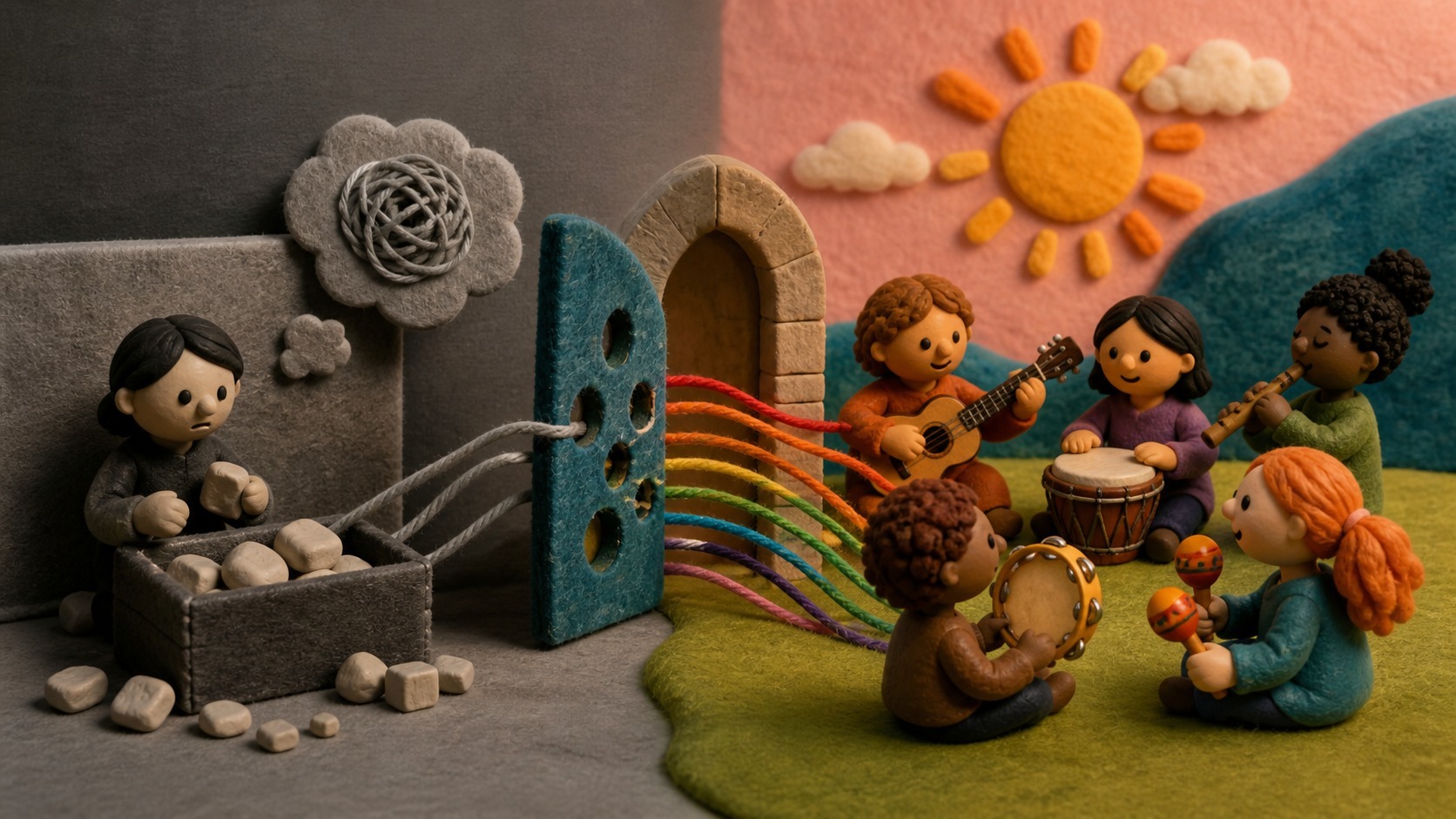
Reviewing water use, food shopping and household consumption is not about distributing blame. It is about noticing small facts, protecting basic needs and choosing an adjustment people can sustain. This guide offers questions, cases and a short method for learning without turning every mistake into a personal verdict.
Review to understand rather than accuse#
A useful review separates evidence from interpretation. Evidence may be four yoghurts spoiling, a higher bill or takeaway meals on three evenings. A quick interpretation says that someone is irresponsible. Before concluding, ask what changed: schedules, health, available money, faults, cooking skills or portion sizes. The World Health Organization notes that adequate food and safe water are health needs; saving must never mean restricting essentials. The Food and Agriculture Organization recommends preventing losses through planning, storage and safe use. A one-week notebook with three headings—what happened, a possible cause and the next experiment—turns blame into curiosity.
A useful review separates evidence from interpretation. Evidence may be four yoghurts spoiling, a higher bill or takeaway meals on three evenings.
Questions that turn complaint into a plan#
Short conversations improve with specific questions. What should we keep because it works? What surprised us? What resource is missing? What action takes less than twenty minutes? How will we know on Friday whether it helped? There is no need to measure everything. Counting discarded portions, noting meter readings or checking two receipts can be enough. The European Commission distinguishes use-by dates from best-before dates; understanding that difference prevents both unsafe eating and needless waste. Privacy matters too. When a family, school or community group shares information, Spain’s data-protection authority advises requesting only what is necessary for the agreed purpose. A responsible plan protects money, health and dignity.
Case 1: Lucia’s fridge and the end of blind shopping#
Lucia lived with two teenagers and felt that fruit, leafy vegetables and leftovers were thrown away every Sunday. Their first response was to ban treats, but that increased arguments and did not reduce waste. They changed approach. For seven days they kept a sheet on the fridge and recorded which food remained unused and why. They found that sports practice changed dinner plans and that fruit was stored out of sight. On Sunday they agreed to shop twice weekly, freeze sliced bread and put a “use first” box at eye level. The next review showed less waste, but also too few filling snacks on long days. They adjusted the list without reproach. The problem was not one person; it was an invisible system.
Case 2: a water bill that needed checking before cuts#
Omar’s household received a water bill far higher than usual. At first they thought someone was leaving a tap on and proposed shorter showers, even though an older relative needed time to wash safely. Instead of imposing a restriction, they made three checks: they read the meter at night and in the morning when no use was expected, inspected cisterns and compared the billed period. The overnight reading changed and the municipal service confirmed a small leak. Repairing it was more effective and fairer than monitoring family members. The crucial question is: have we verified the cause before asking for sacrifices? Public supply and consumer guidance can explain bills, complaints and rights. Saving water matters; hygiene and accessibility matter as well.
Case 3: school meals and a shared solution#
A group of families noticed that some children had little energy in the afternoon while part of the school meal was left untouched. Rather than blaming pupils, tutors, kitchen staff and families listened to different reasons: limited eating time, difficult textures, allergy questions and uncertainty about support schemes. They tried one week of sample portions, a plain-language menu explanation and a confidential channel for questions. The school kept food-safety procedures in place and sought advice when health needs appeared. UNICEF and public health authorities emphasise that children’s participation should be respectful and age appropriate. Improvement did not mean forcing a clean plate; it meant creating conditions for better eating and reporting difficulties without stigma.
A fifteen-minute review in four steps#
Choose a fixed time and one issue only. First, describe the event in a verifiable sentence. Second, name two possible causes, including one that is not controlled by an individual. Third, choose a small trial with a person responsible and a date. Fourth, agree on the sign you will review: a meter photo, a leftover list, a call to consumer services or a feeling of reduced effort. If the trial fails, it is not a failure; it is information. Repair can mean booking an appointment, changing a container, applying for meal support or requesting a technical inspection. Decisions should respect budget, rest, health and real capacity. The aim is to reduce waste and unnecessary use without anyone losing food, water or support.
Reliable sources and when to seek support#
To check decisions, use the WHO for health and safe water, the FAO for food and waste, the European Commission for labelling and food safety, and local authorities for water, consumer rights and assistance. With disconnection warnings, debts affecting basic needs, unintentional weight loss, intense anxiety about eating or a leak that cannot be resolved, contact social, health or consumer services, or the water provider. Asking early is responsible action. A kind review can end with one useful sentence: “this is what we learned, this is what we will try, and this is what we need.” Each small improvement can support the next one.
Going deeper without losing kindness#
Review to understand rather than accuse#
A useful review separates evidence from interpretation. Evidence may be four yoghurts spoiling, a higher bill or takeaway meals on three evenings. A quick interpretation says that someone is irresponsible. Before concluding, ask what changed: schedules, health, available money, faults, cooking skills or portion sizes. The World Health Organization notes that adequate food and safe water are health needs; saving must never mean restricting essentials. The Food and Agriculture Organization recommends preventing losses through planning, storage and safe use. A one-week notebook with three headings—what happened, a possible cause and the next experiment—turns blame into curiosity.
Questions that turn complaint into a plan#
Short conversations improve with specific questions. What should we keep because it works? What surprised us? What resource is missing? What action takes less than twenty minutes? How will we know on Friday whether it helped? There is no need to measure everything. Counting discarded portions, noting meter readings or checking two receipts can be enough. The European Commission distinguishes use-by dates from best-before dates; understanding that difference prevents both unsafe eating and needless waste. Privacy matters too. When a family, school or community group shares information, Spain’s data-protection authority advises requesting only what is necessary for the agreed purpose. A responsible plan protects money, health and dignity.
Case 1: Lucia’s fridge and the end of blind shopping#
Lucia lived with two teenagers and felt that fruit, leafy vegetables and leftovers were thrown away every Sunday. Their first response was to ban treats, but that increased arguments and did not reduce waste. They changed approach. For seven days they kept a sheet on the fridge and recorded which food remained unused and why. They found that sports practice changed dinner plans and that fruit was stored out of sight. On Sunday they agreed to shop twice weekly, freeze sliced bread and put a “use first” box at eye level. The next review showed less waste, but also too few filling snacks on long days. They adjusted the list without reproach. The problem was not one person; it was an invisible system.
Case 2: a water bill that needed checking before cuts#
Omar’s household received a water bill far higher than usual. At first they thought someone was leaving a tap on and proposed shorter showers, even though an older relative needed time to wash safely. Instead of imposing a restriction, they made three checks: they read the meter at night and in the morning when no use was expected, inspected cisterns and compared the billed period. The overnight reading changed and the municipal service confirmed a small leak. Repairing it was more effective and fairer than monitoring family members. The crucial question is: have we verified the cause before asking for sacrifices? Public supply and consumer guidance can explain bills, complaints and rights. Saving water matters; hygiene and accessibility matter as well.
Case 3: school meals and a shared solution#
A group of families noticed that some children had little energy in the afternoon while part of the school meal was left untouched. Rather than blaming pupils, tutors, kitchen staff and families listened to different reasons: limited eating time, difficult textures, allergy questions and uncertainty about support schemes. They tried one week of sample portions, a plain-language menu explanation and a confidential channel for questions. The school kept food-safety procedures in place and sought advice when health needs appeared. UNICEF and public health authorities emphasise that children’s participation should be respectful and age appropriate. Improvement did not mean forcing a clean plate; it meant creating conditions for better eating and reporting difficulties without stigma.
A fifteen-minute review in four steps#
Choose a fixed time and one issue only. First, describe the event in a verifiable sentence. Second, name two possible causes, including one that is not controlled by an individual. Third, choose a small trial with a person responsible and a date. Fourth, agree on the sign you will review: a meter photo, a leftover list, a call to consumer services or a feeling of reduced effort. If the trial fails, it is not a failure; it is information. Repair can mean booking an appointment, changing a container, applying for meal support or requesting a technical inspection. Decisions should respect budget, rest, health and real capacity. The aim is to reduce waste and unnecessary use without anyone losing food, water or support.