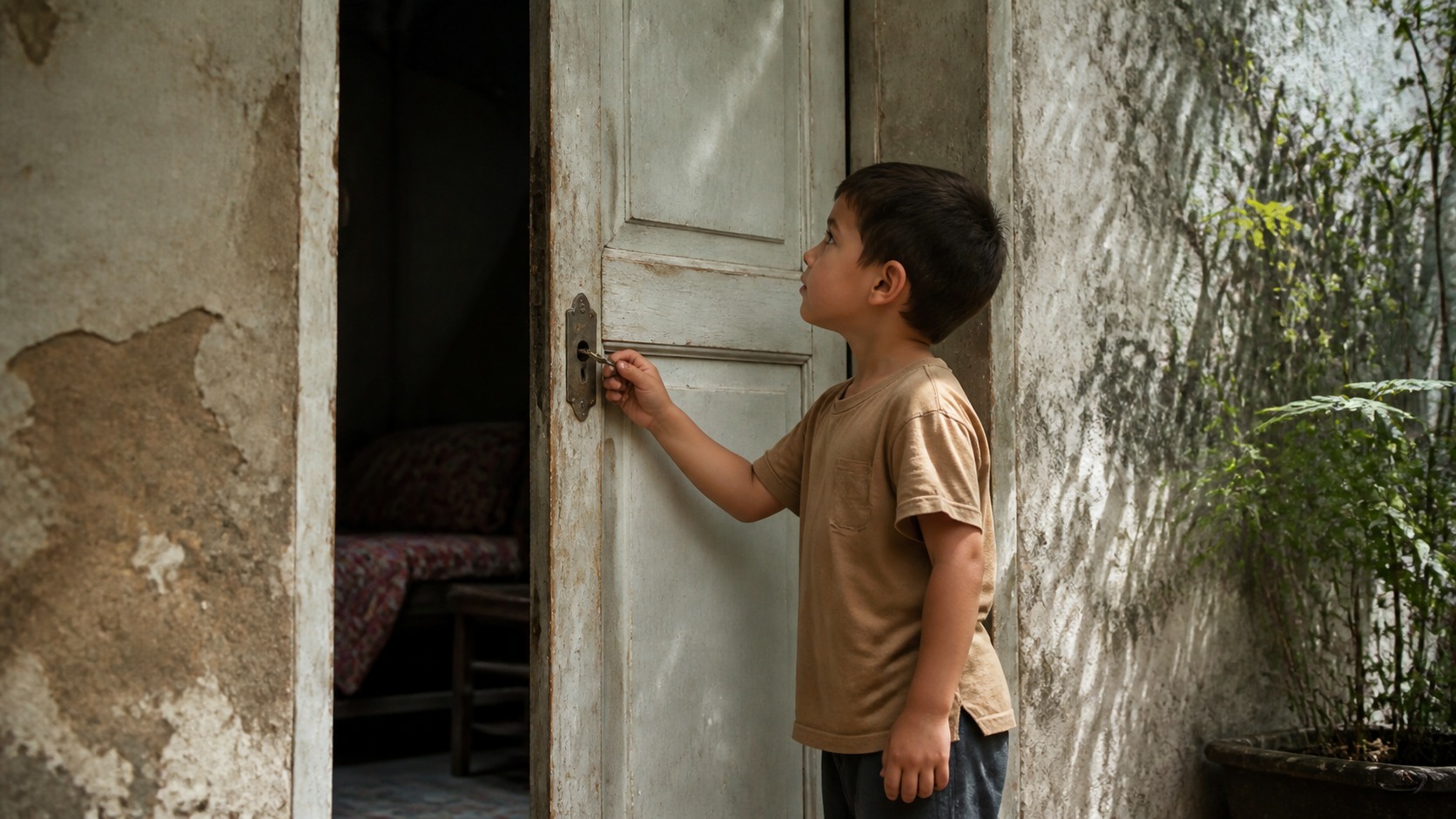
A five-step plan for responding to a specific difficulty without improvising, escalating conflict or losing sight of safety.
Step 1: describe the difficulty without blame#
A family difficulty becomes easier to address when it is named through observable facts. Rather than saying someone is selfish or never helps, the group can record what happens, when it happens and what follows. An older relative may be alone on Tuesdays, a teenager may receive no reply to messages, or a carer may miss appointments because there is no relief. This language separates people from the problem and makes a priority possible. The World Health Organization promotes care centred on people and their contexts: the useful question is what support would enable dignified participation, not who is at fault. Case 1: Marta, aged 74, wanted to continue attending her workshop, but her son cancelled transport at short notice. Four weeks of notes showed that timing, not commitment, was the issue. They confirmed journeys on Sunday and found a neighbour as backup.
A family difficulty becomes easier to address when it is named through observable facts.
Step 2: listen across generations#
Before assigning solutions, give every voice a brief turn, including children, teenagers and older adults. Listening does not require accepting every request; it requires understanding the need behind it. UNICEF and the Convention on the Rights of the Child make clear that children's participation should be genuine and age-appropriate. Likewise, an older person's autonomy does not disappear because support is needed. Useful questions are: what do you want to keep, what worries you, what information may be shared, and what help do you not want? Case 2: Dani did not want medical details shared with cousins, but asked for someone to accompany him to the health centre. The family only shared the departure time. Help did not become surveillance, and trust grew.
Step 3: share realistic support#
A practical plan distinguishes responsibilities from endless favours. It can name one task, one responsible person, one date, a substitute and a way to alert others. The Council of Europe links social cohesion to participation and equal access, so distribution must consider time, money, mobility and rest. No one should carry all care by default because of gender, age or proximity. Case 3: in Amina's family, an aunt coordinated calls, a neighbour brought shopping once a week and her father managed online forms. When the aunt became ill, the calendar already showed who to contact. Continuity did not depend on one heroic person; it depended on a visible, realistic agreement.
Step 4: try one small action#
The first action should be small, safe and measurable. It may be a ten-minute call, a medicine list reviewed with professionals, a visit to a municipal resource or a weekly meal without phones. UNESCO highlights how learning between generations strengthens communities when there are concrete chances to cooperate. There is no need to wait for a perfect relationship. It is better to test one action for two weeks and observe attendance, fatigue, conflict and wellbeing. If it does not work, adjust the action rather than label the person who could not complete it. This habit reduces improvisation and makes modest progress visible.
Step 5: review and seek help early#
Set the review date at the start: fifteen minutes every two weeks can answer what helped, what was burdensome and what changes now. A zero-to-five scale for calm, workload and participation keeps the discussion concrete. Institutional sources can guide action but cannot replace professional assessment. With violence, neglect, rapid deterioration, thoughts of self-harm or an inability to meet basic needs, contact emergency, health or social-care services in the relevant area. Seeking help early does not break a family bond; it protects it. Safety and consent are conditions of every agreement. A plan must never pressure anyone to disclose private data or remain in a risky situation.
Sources that support the plan#
For reliable guidance, consult WHO materials on person-centred care, UNICEF resources on participation of children and adolescents, UNESCO work on lifelong learning, and Council of Europe materials on cohesion and inclusion. In Spain, the Ministry of Health and local social services can explain routes appropriate to each municipality. Spain's data-protection authority is also useful before sharing health, education or social information. These sources do not provide one formula. They help check that a plan respects rights, privacy, accessibility and participation. A clear agreement can fit on one page and be revised calmly when schedules or needs change.
Step 1: describe the difficulty without blame#
A family difficulty becomes easier to address when it is named through observable facts. Rather than saying someone is selfish or never helps, the group can record what happens, when it happens and what follows. An older relative may be alone on Tuesdays, a teenager may receive no reply to messages, or a carer may miss appointments because there is no relief. This language separates people from the problem and makes a priority possible. The World Health Organization promotes care centred on people and their contexts: the useful question is what support would enable dignified participation, not who is at fault. Case 1: Marta, aged 74, wanted to continue attending her workshop, but her son cancelled transport at short notice. Four weeks of notes showed that timing, not commitment, was the issue. They confirmed journeys on Sunday and found a neighbour as backup.
Step 2: listen across generations#
Before assigning solutions, give every voice a brief turn, including children, teenagers and older adults. Listening does not require accepting every request; it requires understanding the need behind it. UNICEF and the Convention on the Rights of the Child make clear that children's participation should be genuine and age-appropriate. Likewise, an older person's autonomy does not disappear because support is needed. Useful questions are: what do you want to keep, what worries you, what information may be shared, and what help do you not want? Case 2: Dani did not want medical details shared with cousins, but asked for someone to accompany him to the health centre. The family only shared the departure time. Help did not become surveillance, and trust grew.
Step 3: share realistic support#
A practical plan distinguishes responsibilities from endless favours. It can name one task, one responsible person, one date, a substitute and a way to alert others. The Council of Europe links social cohesion to participation and equal access, so distribution must consider time, money, mobility and rest. No one should carry all care by default because of gender, age or proximity. Case 3: in Amina's family, an aunt coordinated calls, a neighbour brought shopping once a week and her father managed online forms. When the aunt became ill, the calendar already showed who to contact. Continuity did not depend on one heroic person; it depended on a visible, realistic agreement.
Step 4: try one small action#
The first action should be small, safe and measurable. It may be a ten-minute call, a medicine list reviewed with professionals, a visit to a municipal resource or a weekly meal without phones. UNESCO highlights how learning between generations strengthens communities when there are concrete chances to cooperate. There is no need to wait for a perfect relationship. It is better to test one action for two weeks and observe attendance, fatigue, conflict and wellbeing. If it does not work, adjust the action rather than label the person who could not complete it. This habit reduces improvisation and makes modest progress visible.
Step 5: review and seek help early#
Set the review date at the start: fifteen minutes every two weeks can answer what helped, what was burdensome and what changes now. A zero-to-five scale for calm, workload and participation keeps the discussion concrete. Institutional sources can guide action but cannot replace professional assessment. With violence, neglect, rapid deterioration, thoughts of self-harm or an inability to meet basic needs, contact emergency, health or social-care services in the relevant area. Seeking help early does not break a family bond; it protects it. Safety and consent are conditions of every agreement. A plan must never pressure anyone to disclose private data or remain in a risky situation.
Sources that support the plan#
For reliable guidance, consult WHO materials on person-centred care, UNICEF resources on participation of children and adolescents, UNESCO work on lifelong learning, and Council of Europe materials on cohesion and inclusion. In Spain, the Ministry of Health and local social services can explain routes appropriate to each municipality. Spain's data-protection authority is also useful before sharing health, education or social information. These sources do not provide one formula. They help check that a plan respects rights, privacy, accessibility and participation. A clear agreement can fit on one page and be revised calmly when schedules or needs change.
Make the agreement last#
For an agreement to last, it must fit ordinary life. Write down the review day, the message that signals a change and the resource that can offer guidance if someone cannot continue. Use plain language and let every participant request a change without fear of being judged. A short trial makes it possible to learn without turning a mistake into blame. It also helps to recognise the effort of the person receiving support and of the person giving it. Reciprocity does not require identical tasks; it requires every voice to count. Where language, mobility or digital-access barriers exist, the plan should include accessible and in-person alternatives. Public services and community organisations can offer mediation, information and places to connect. A sound plan does not replace a network. It makes that network clearer, safer and easier to sustain over time. At the end of each review, every person can repeat in their own words what they will do and when they will ask for a change. This short check reduces misunderstanding and keeps support respectful.